




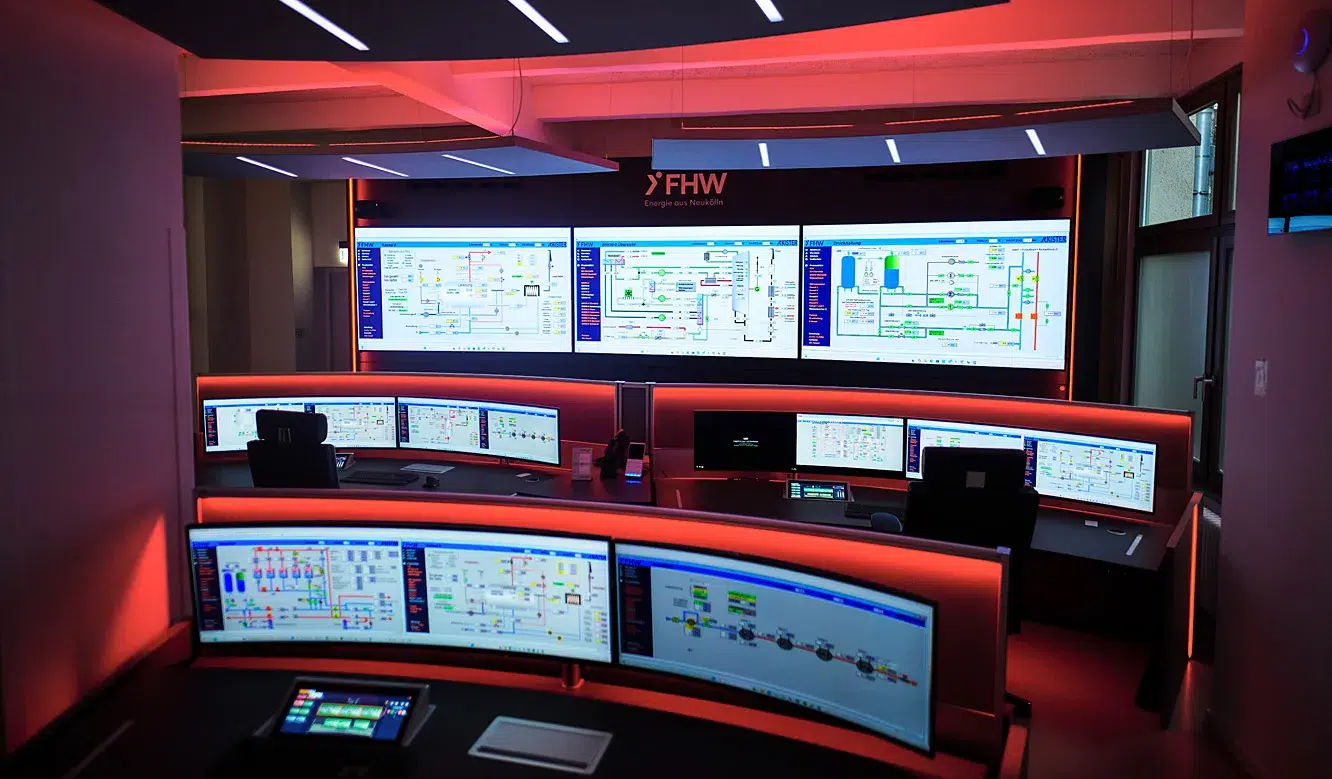
New system control room for Berlin's heat supply: The path from stoker to operator of the future
How do you change a job profile that has been shaped by decades of experience, physical labor, and routine? And how do you get a team excited about a new digital control room that is suddenly no longer just supposed to “warm up,” but also optimize, analyze, and control proactively? These are precisely the questions at the heart of a project that is setting new standards in Berlin: with its new system control room, Fernheizwerk Neukölln AG (FHW) has not only modernized its control center, but also opened a new chapter in the history of heat supply – with the support of the JST experts for operation center solutions.
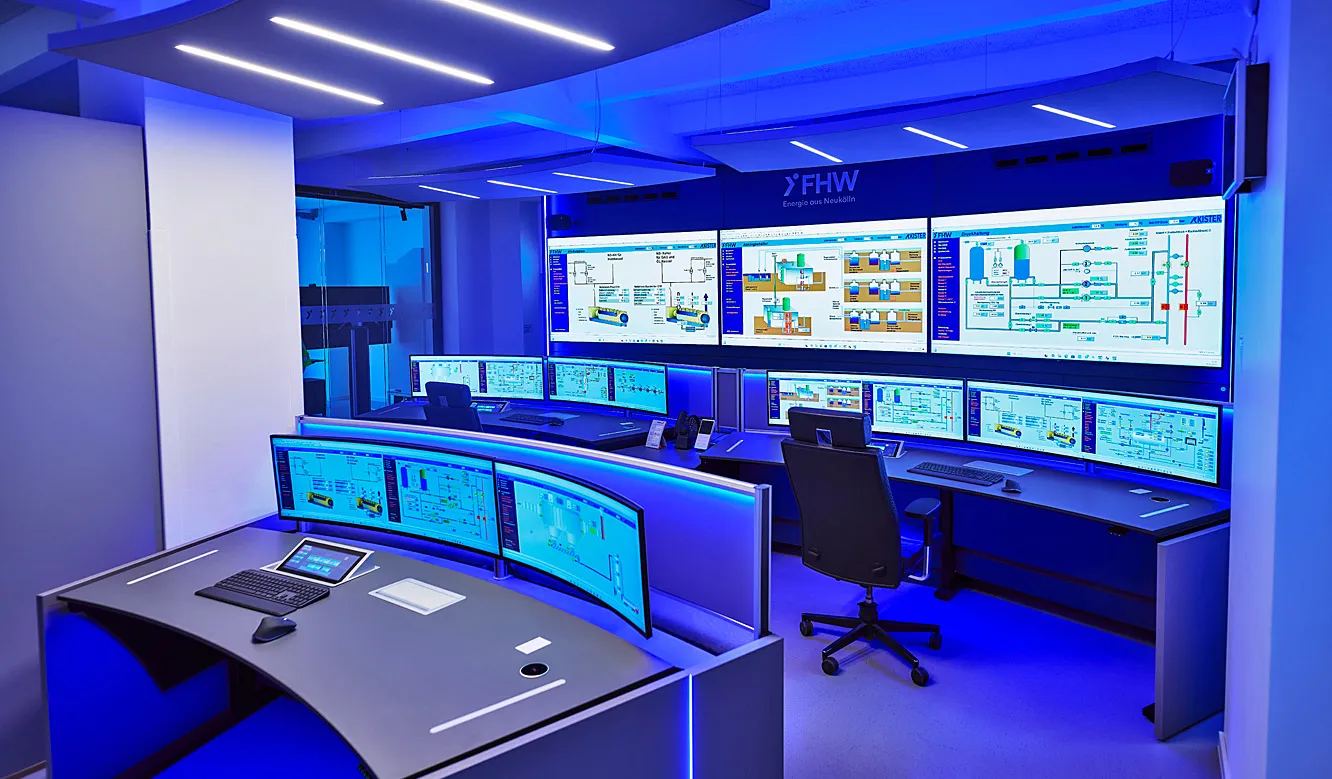
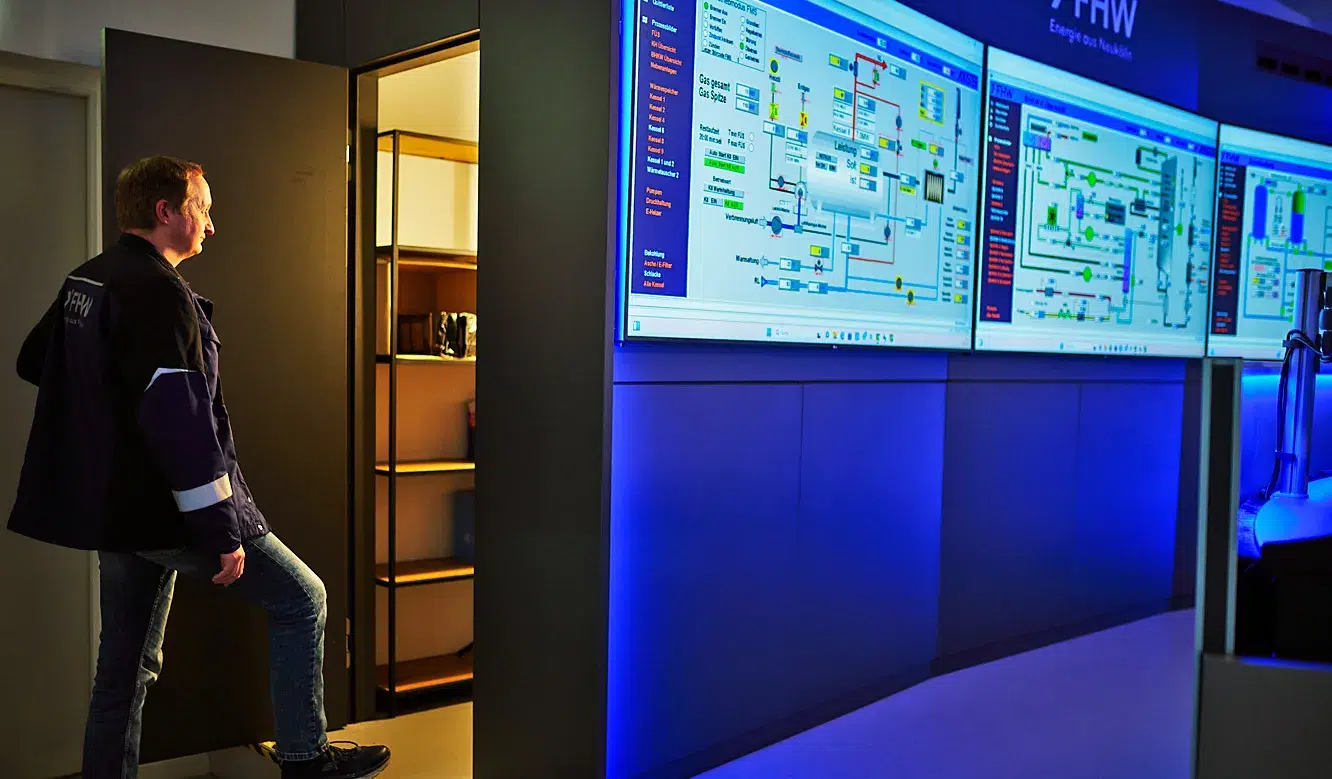
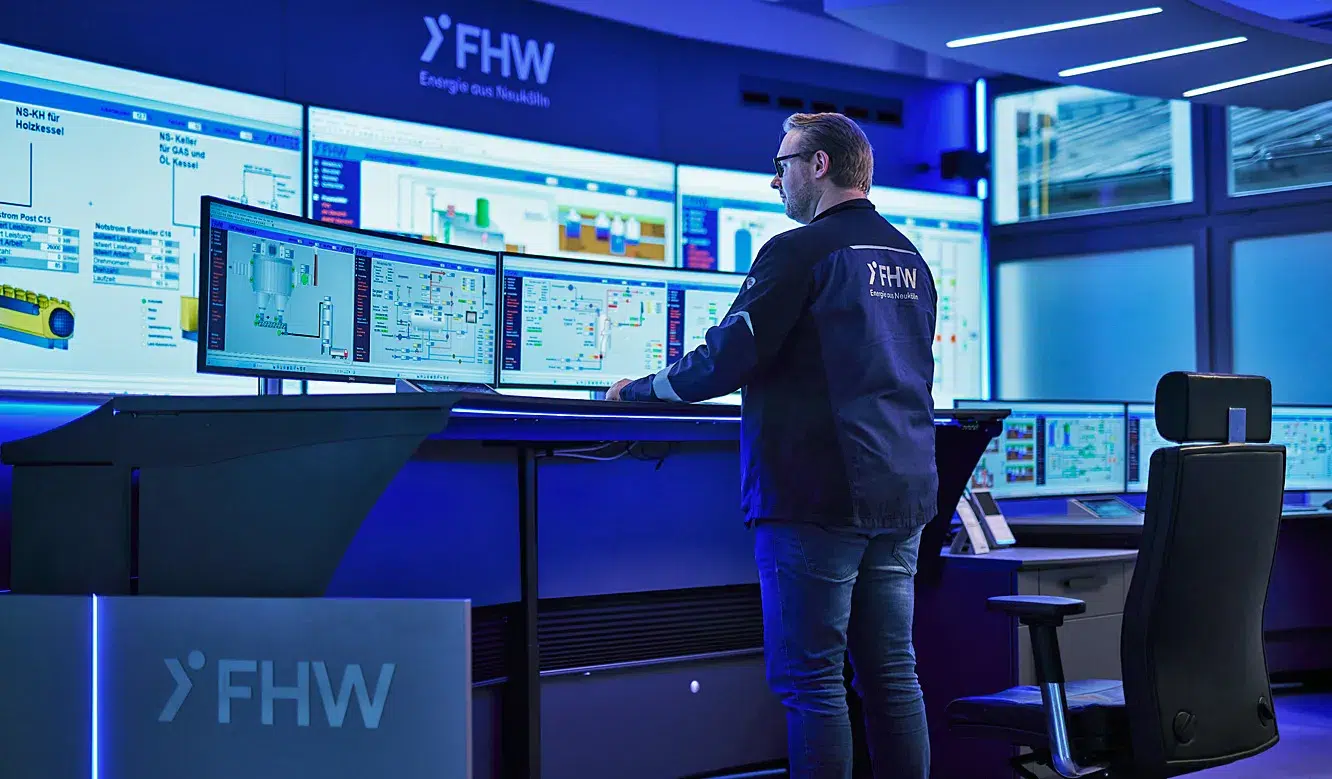
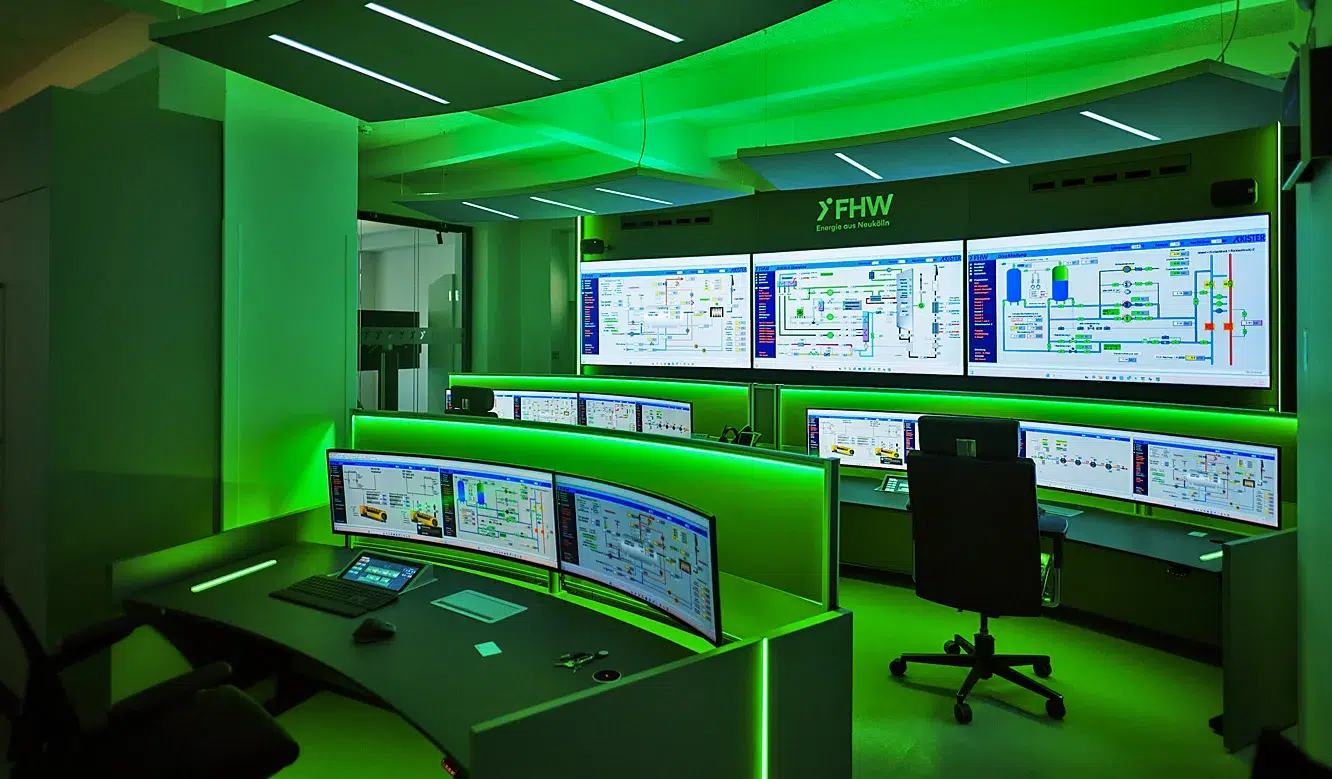
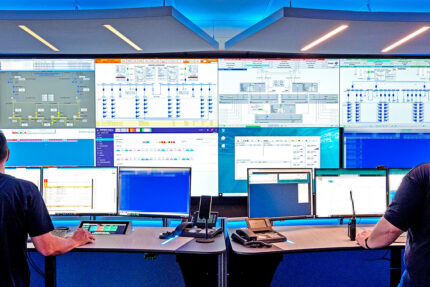
“The system control room is now the heart of our company,” says project manager and technical systems team leader Jörn Köhler. “This is where the district heating network, power generation, and our entire plant infrastructure come together. We no longer think in terms of individual areas — we think in terms of systems.”
“As long as it's warm” is no longer enough today
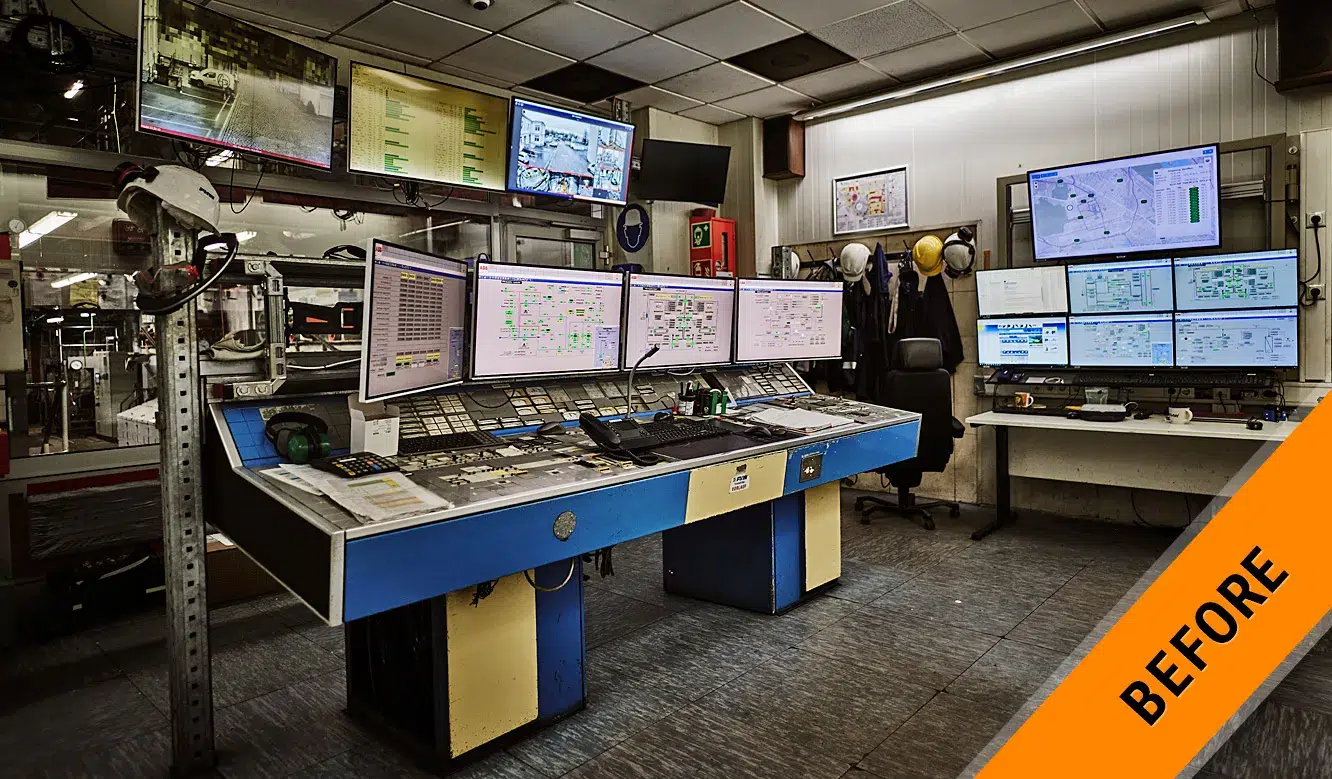
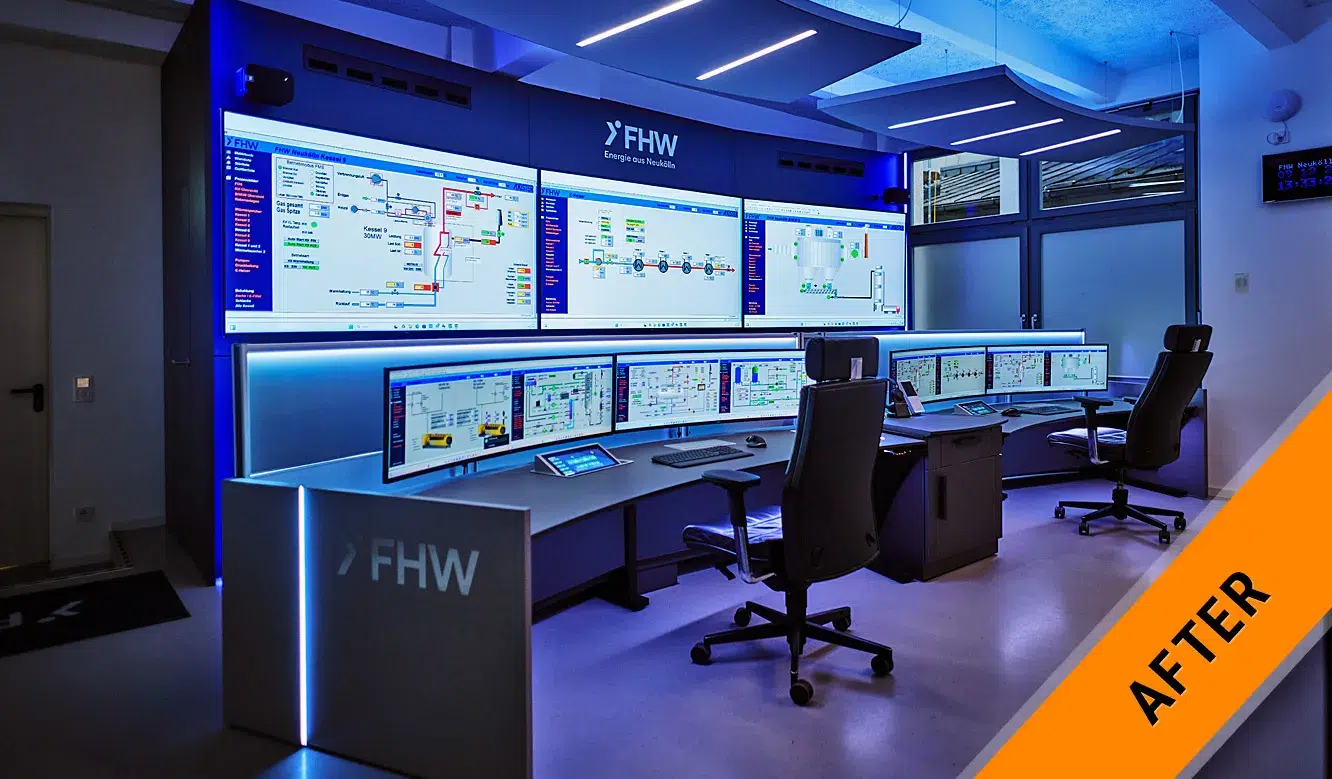
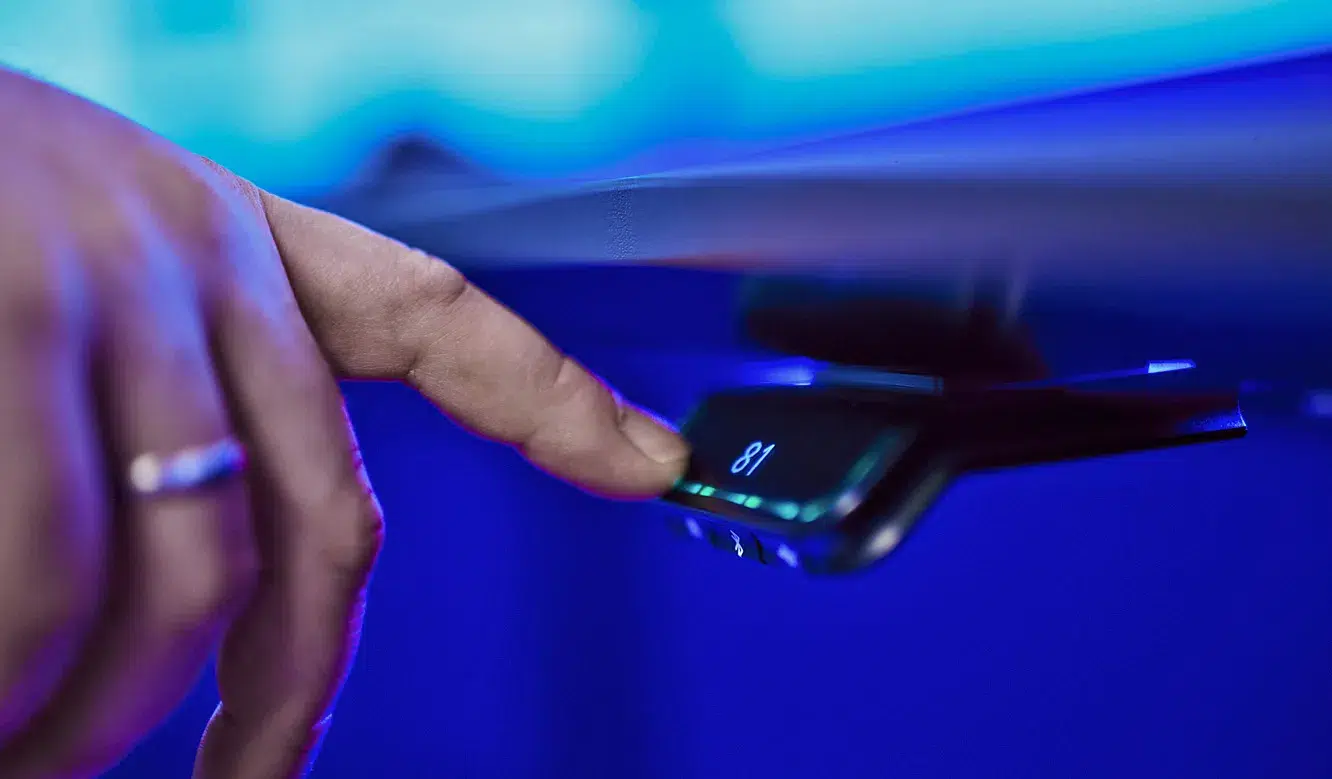
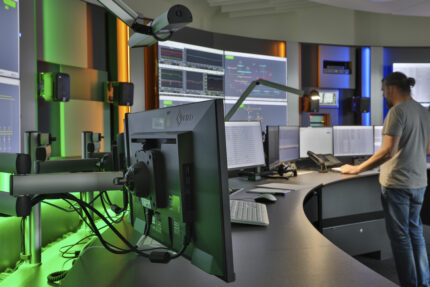
The starting point was as typical as it was challenging: parts of the old control room still consisted of components from the 1970s — some analog, with mechanical indicator lights and classic control buttons. “That’s how we started to automate the Neukölln site,” recalls Köhler. “When you see the before and after pictures, you immediately realize that it was urgently needed.”
It soon became apparent that the refurbishment would not only be a technical modernisation. It also represents a shift in mindset. The district heating plant is right in the middle of a transformation. Since the coal phase-out in 2024, the pressure has increased to generate heat not only reliably, but also economically and in a climate-friendly way. “In the past, the goal was simply to make sure the customer stayed warm,” Köhler explains. “Today, the operator is expected to actively support the optimisation of the supply. That is an entirely new role.”
Everything from a single source – instead of a patchwork
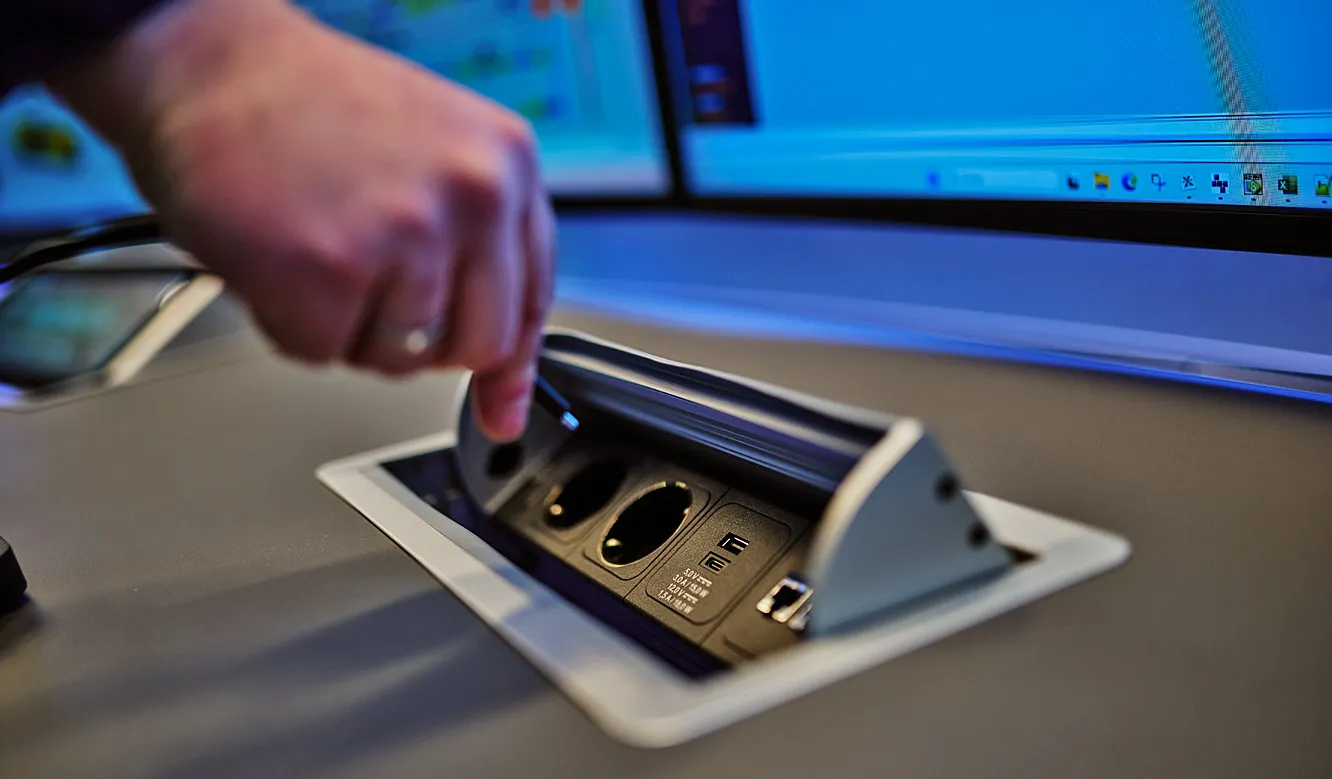
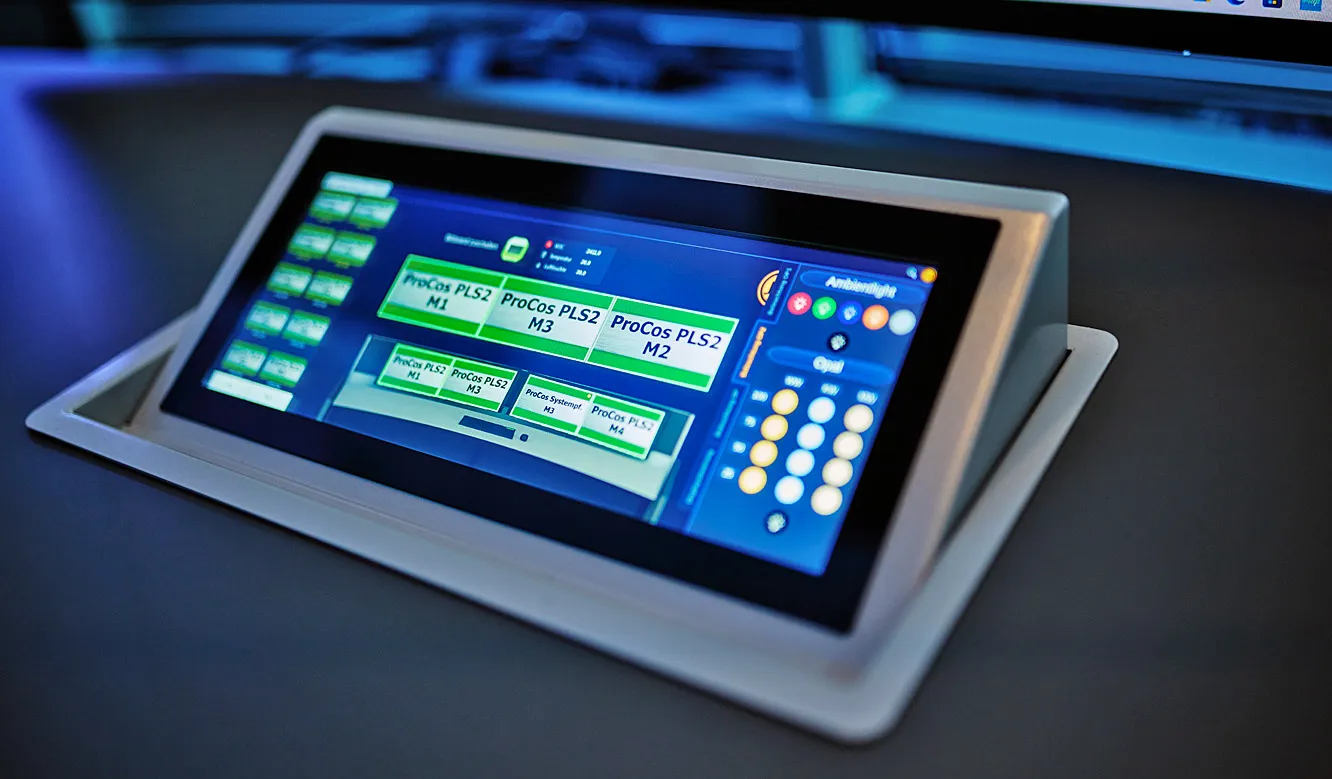
During the planning process for the new system, FHW deliberately chose a partner who not only supplies software but also understands the control room as an overall concept. “We didn’t want a patchwork of individual components,” explains the project manager. “We wanted a well-rounded system comprising visualization, KVM technology, hardware, and an ergonomic environment. This combination immediately convinced us at JST.”
When an idea actually becomes practice
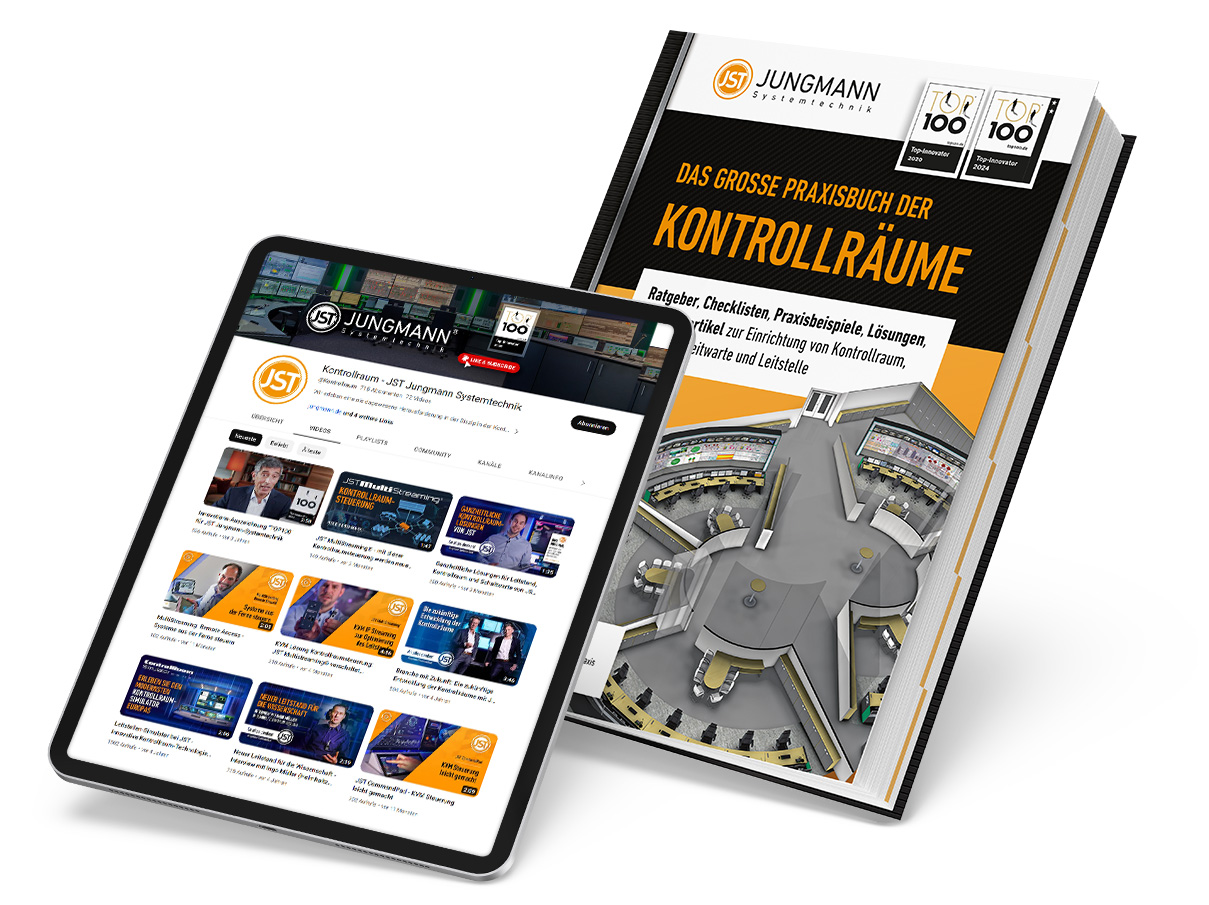
The decision for the new system control room was not made at a desk, but in a space that makes the difference between theory and practice immediately tangible: the JST Control Room Simulator. “I actually only wanted to order the practical handbook,” Jörn Köhler recalls with a smile. “But one phone call turned into an invitation to Jungmann – and the rest is history.
Together with colleagues from the operator team, he recognized in the control room setup what modern control center technology can achieve today: ergonomic workstations, intuitive user interfaces, and, above all, the possibilities of an IP-based KVM architecture (KVM = keyboard, video, mouse). “We already knew that we wanted to use KVM,” says Köhler. “But the network-based version that we got to know in the simulator opened up completely new options for us. Fewer cables, flexible interconnections — it quickly became clear: this is the way to go.”
The workshop became a key building block for the overall concept that followed: a control room in which technology, furniture, visualisation and operational comfort come together as one integrated solution. “We didn’t want to purchase individual products,” Köhler says. “We wanted a complete system. And that is exactly what we found at JST.”
Acceptance doesn’t happen at the push of a button
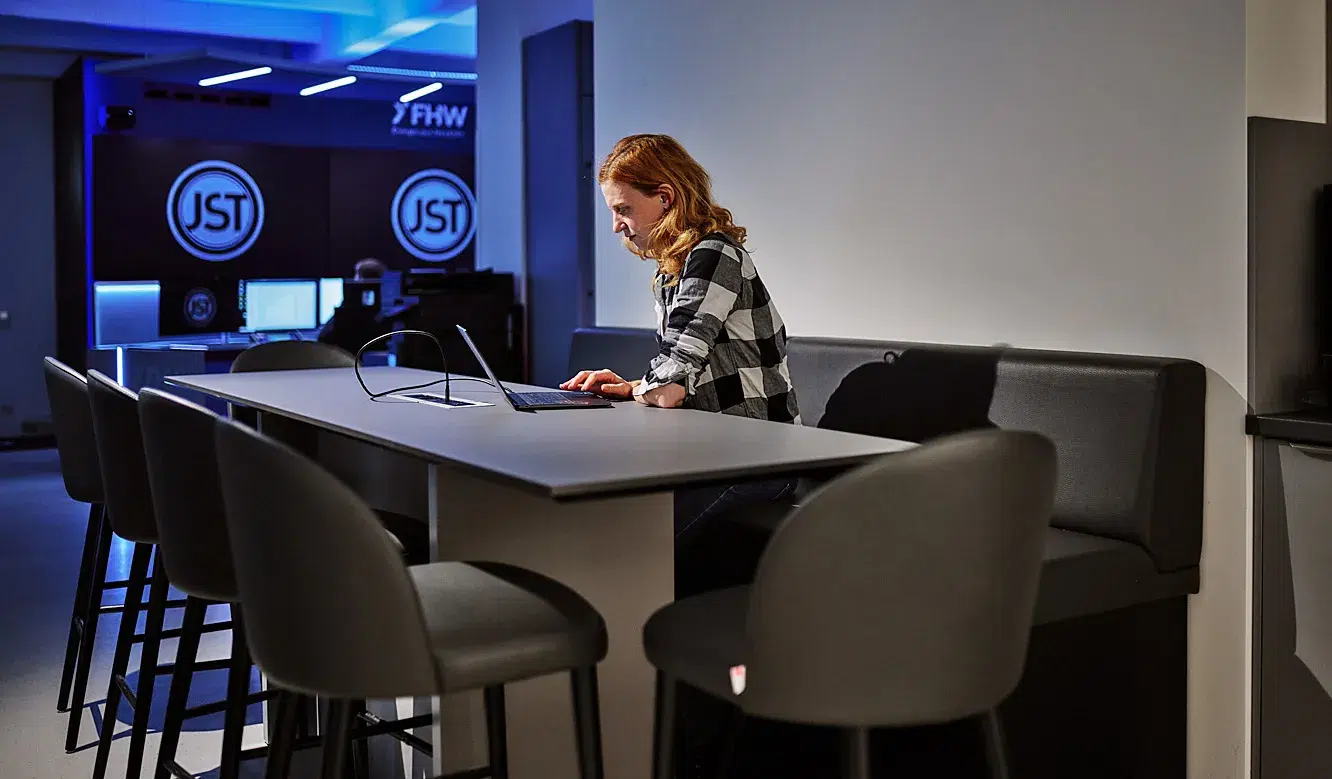
Yet despite all the technology, the greatest challenge remains bringing people along on the journey. “We asked our colleagues early on: What do you want?” recalls Nicola Kleppmann, Head of Digitalisation and Control of Technical Systems. “The answer was often: Ideally, everything should stay the way it used to be. Maybe a bit bigger, new chairs, a better coffee machine.” A completely understandable reaction – because the transition from the traditional boiler operator to the control room operator of the future is a tremendous step.
Input from the team carries real weight
To support this change, FHW introduced what is known as a “trial operation”. Operators work in shifts in the new control room, accompanied by training and direct support. “We give our colleagues the opportunity to see the old and the new system in parallel,” Kleppmann explains. “New on the left, old on the right – and you can immediately see that the change is happening in both worlds. That lowers the threshold.” At the same time, valuable impulses emerge from the team: “Users are often the first to see where things can be improved even further. These ideas drive ongoing development forward significantly.”
A control room for the future of district heating
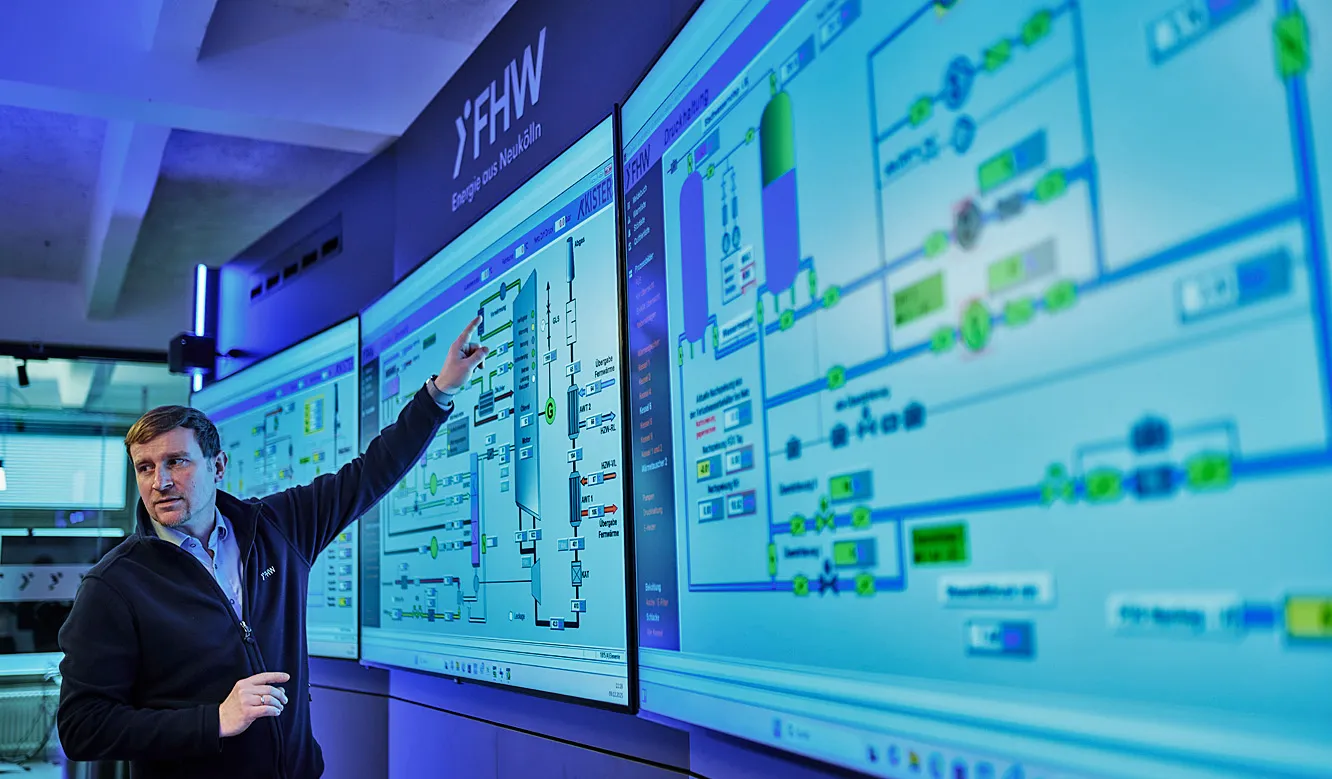
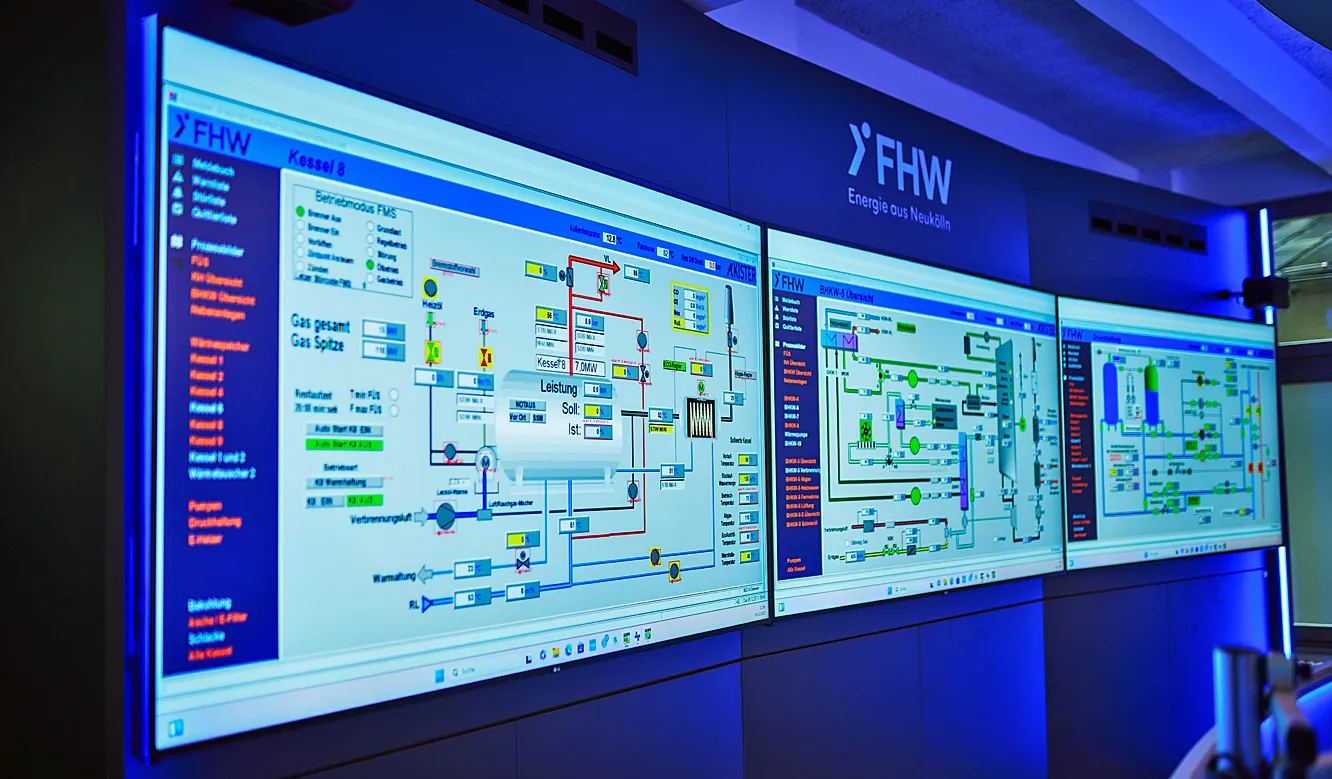
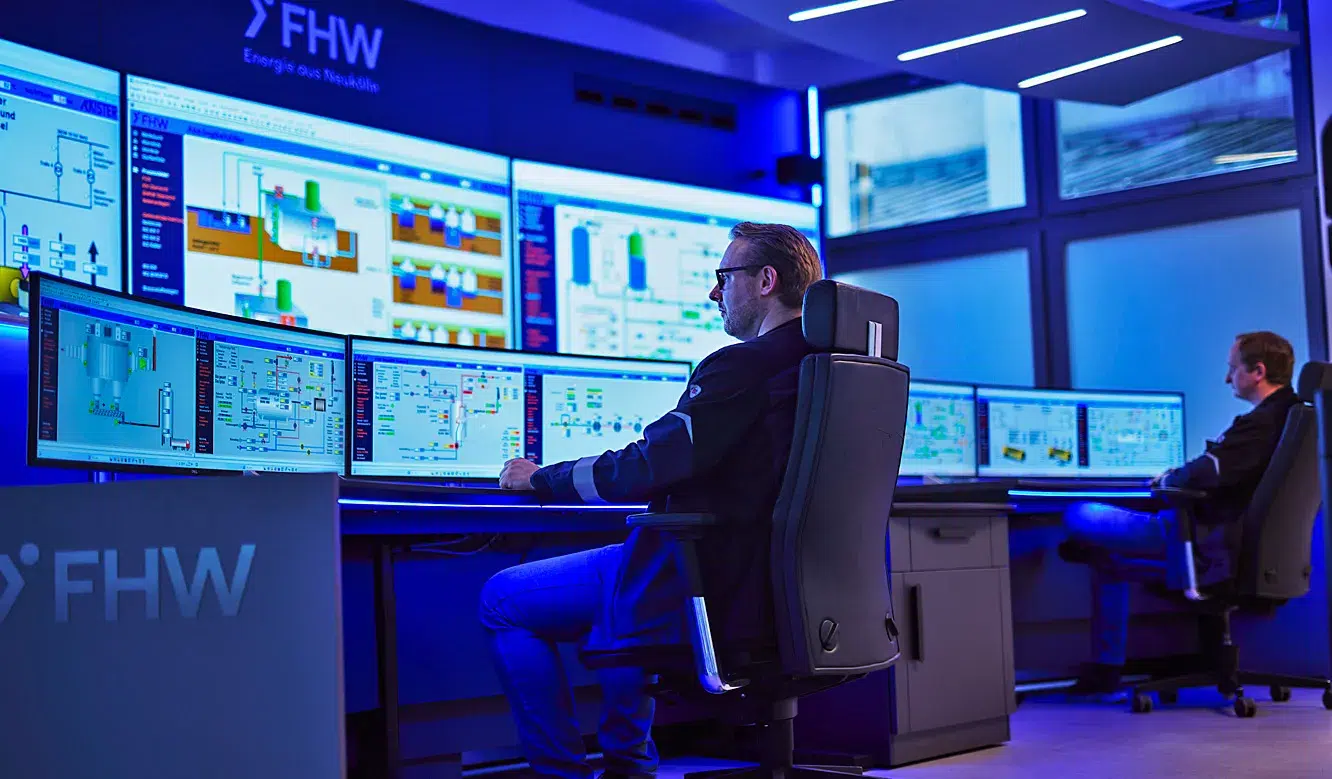
Today, the new system control room is not only a symbol of digitalisation, but also of the future viability of the profession. “Why install ten or twenty screens when we can flexibly place the views on a single screen and even operate them directly there? This is very well received by the employees. Handling via myGUI® is an achievement I would wish for every control room in the world,” says Jörn Köhler. “One mouse, one keyboard, everything under control – that reduces stress and convinces even sceptics.”

This is how the operator profession becomes future-ready
Thinking about tomorrow and the next steps is already under way in Berlin. Topics such as operation without continuous supervision (German: BOSB) illustrate how control rooms could develop in the coming years. For FHW, one thing is clear: the transformation is not complete. But the foundation has been laid. “Without the support of the employees, even the best control room is of no use to me,” Köhler emphasises. “Our goal is to make the operator profession attractive and future-ready. The new system control room is a decisive step towards that.”
Berlin’s local energy transition – district heating for 60,000 customers
The Fernheizwerk Neukölln AG supplies around 60,000 households and businesses in Neukölln and Kreuzberg with heat and hot water. Today, the district heating network covers approximately 130 kilometres – with a growing trend.
With investments of around 70 million euros, the company committed itself to an early phase-out of hard coal by 2025. This step saves 25,000 tonnes of CO₂ every year – five years earlier than required by law.
The new fully digital system control room plays a key role in this process and at the same time serves as the cockpit of the district heating network. With intelligent monitoring and AI-supported tools, it controls the network proactively, integrates new technologies and creates the foundation for a climate-neutral heat supply by 2045.
System control room Fernheizwerk Neukölln AG (FHW) before and after renovation.



Our references today (selection)
A
B
C
E
H
I
M
N
P
R
S
- s.Oliver, Rottendorf
- SachsenEnergie, Dresden
- SAG, Berlin
- SAG, Nürnberg / Nürnberg Messe
- Salzgitter Flachstahl
- Senvion SE, Osterrönfeld
- SGL Carbon Group, Bonn
- SIEMENS
- SIEMENS, Wegberg
- Spenner, Erwitte
- Städtische Werke Magdeburg
- Stadtwerke Gießen
- Stadtwerke Ratingen
- Stadtwerke Schwerin, Kraftwerk Süd
- Stadtwerke Steinburg GmbH, Itzehoe
- Stadtwerke Wolfenbüttel
- Starlim Sterner, Marchtrenk
- STORAG ETZEL, Friedeburg
- Straßenverkehrsamt Frankfurt am Main
V
W
Unsere Referenzen (Archive)