





Central Control Room Enables End-to-End Automation at Unilever’s Buxtehude Plant
Shower gel, deodorant or body lotion: each of us has clear favourites. We assume that fragrance, consistency and composition are unchanging constants. When reaching for a product on the shelf, consumers expect quality – without surprises. To ensure that the same product can be reliably produced from raw materials time and again, production requires precisely timed processes based on fixed parameters and digital workflows. With state-of-the-art control room technology from JST, Unilever Germany in Buxtehude monitors the standards of its global exports.
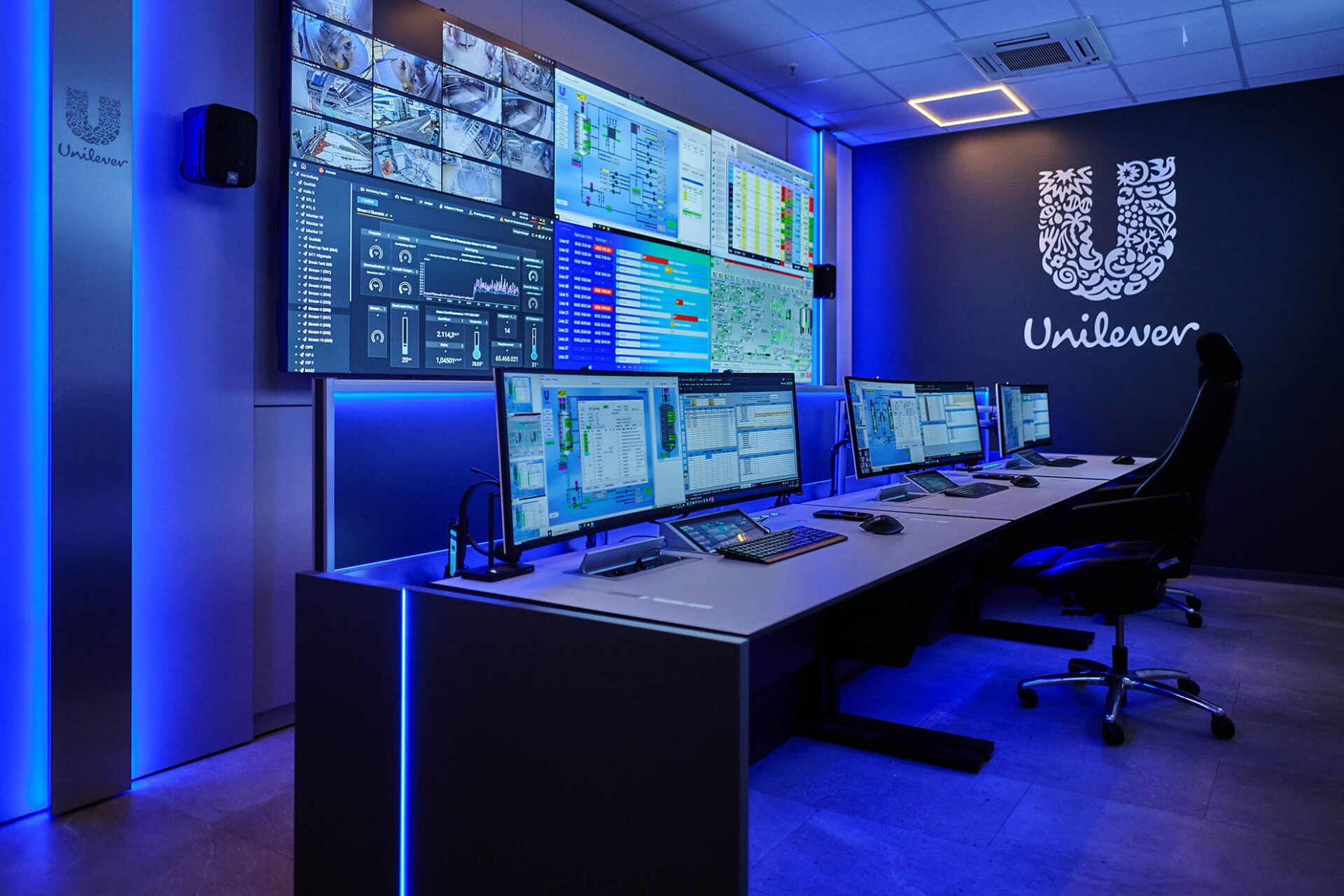
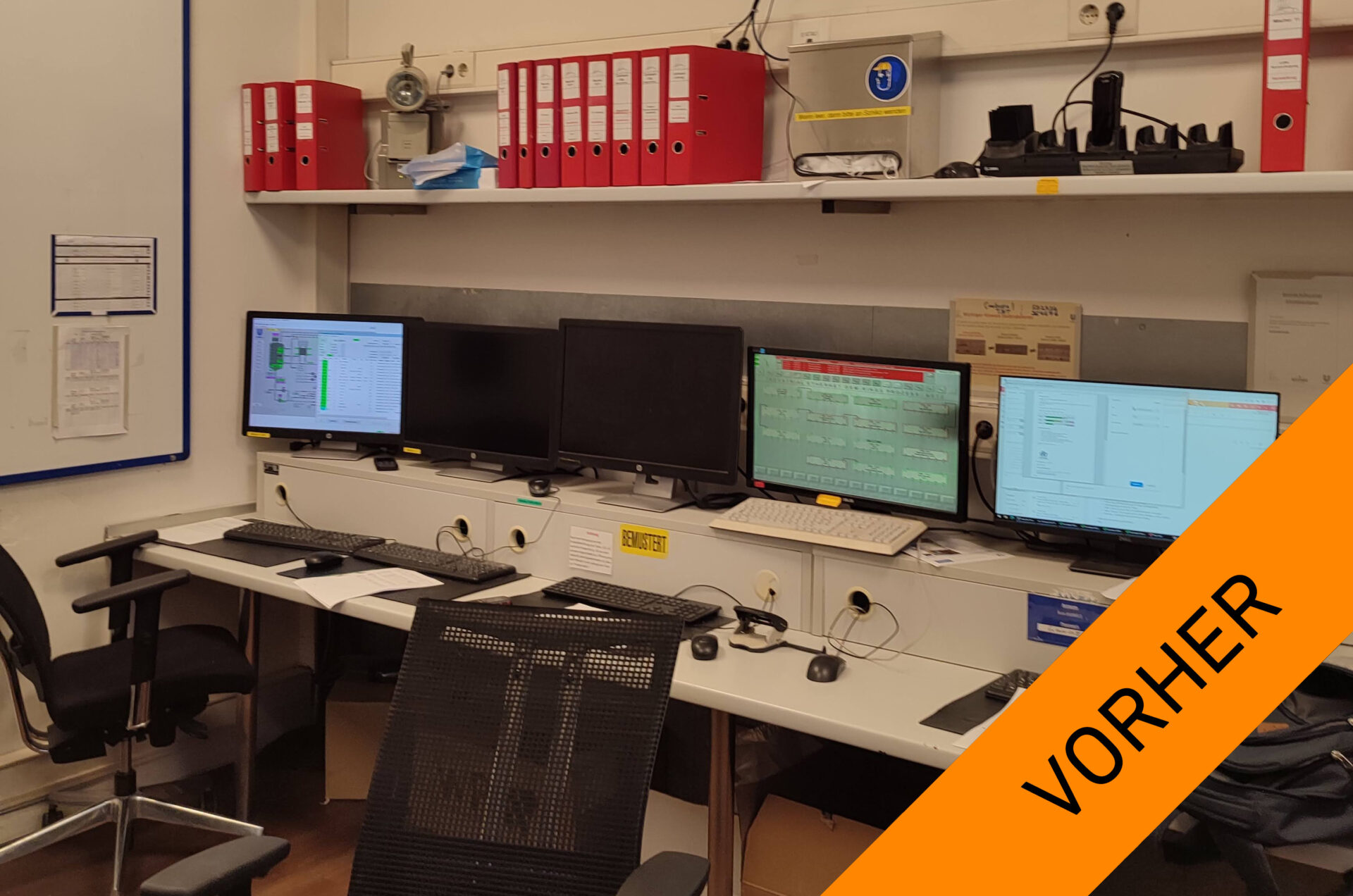
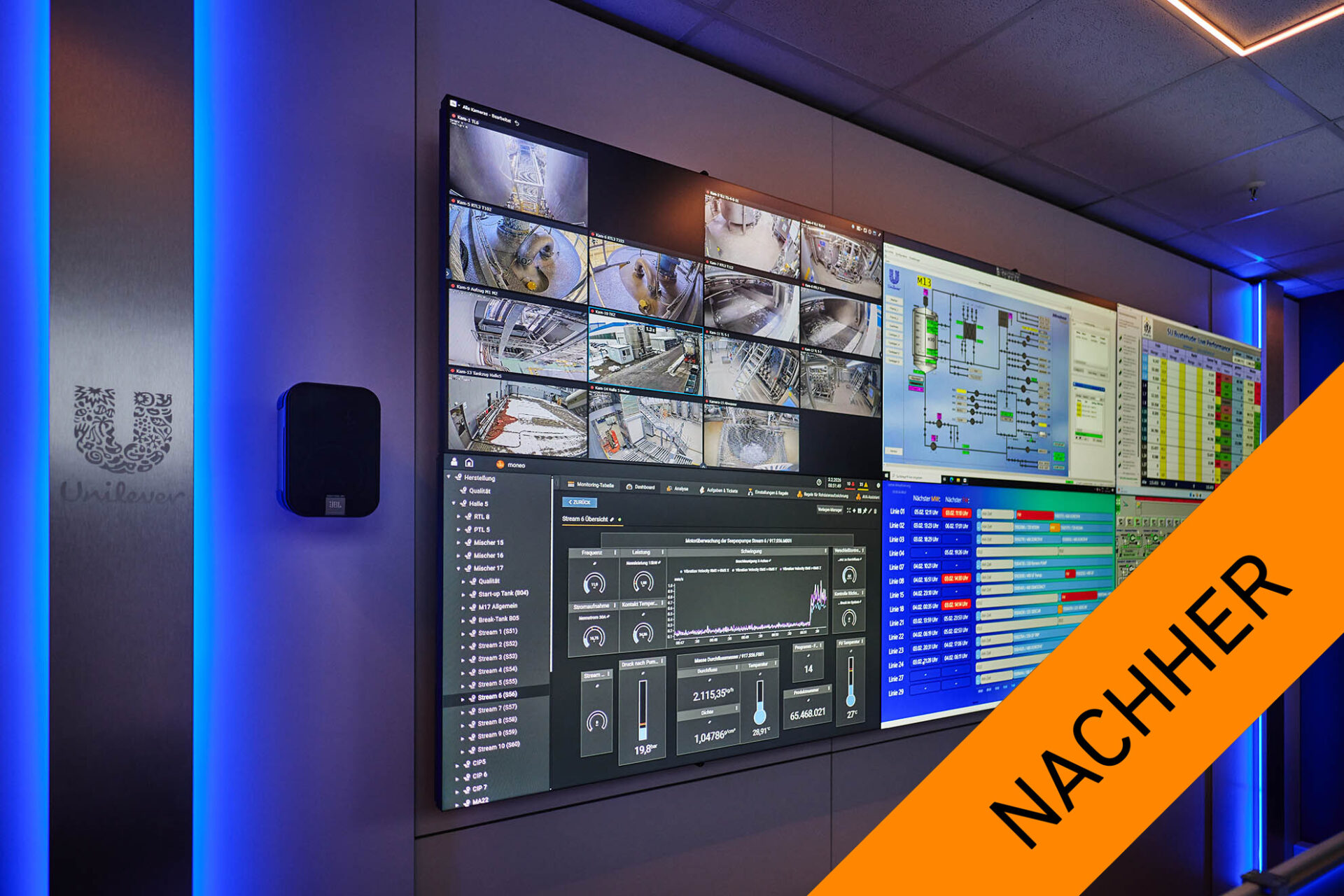
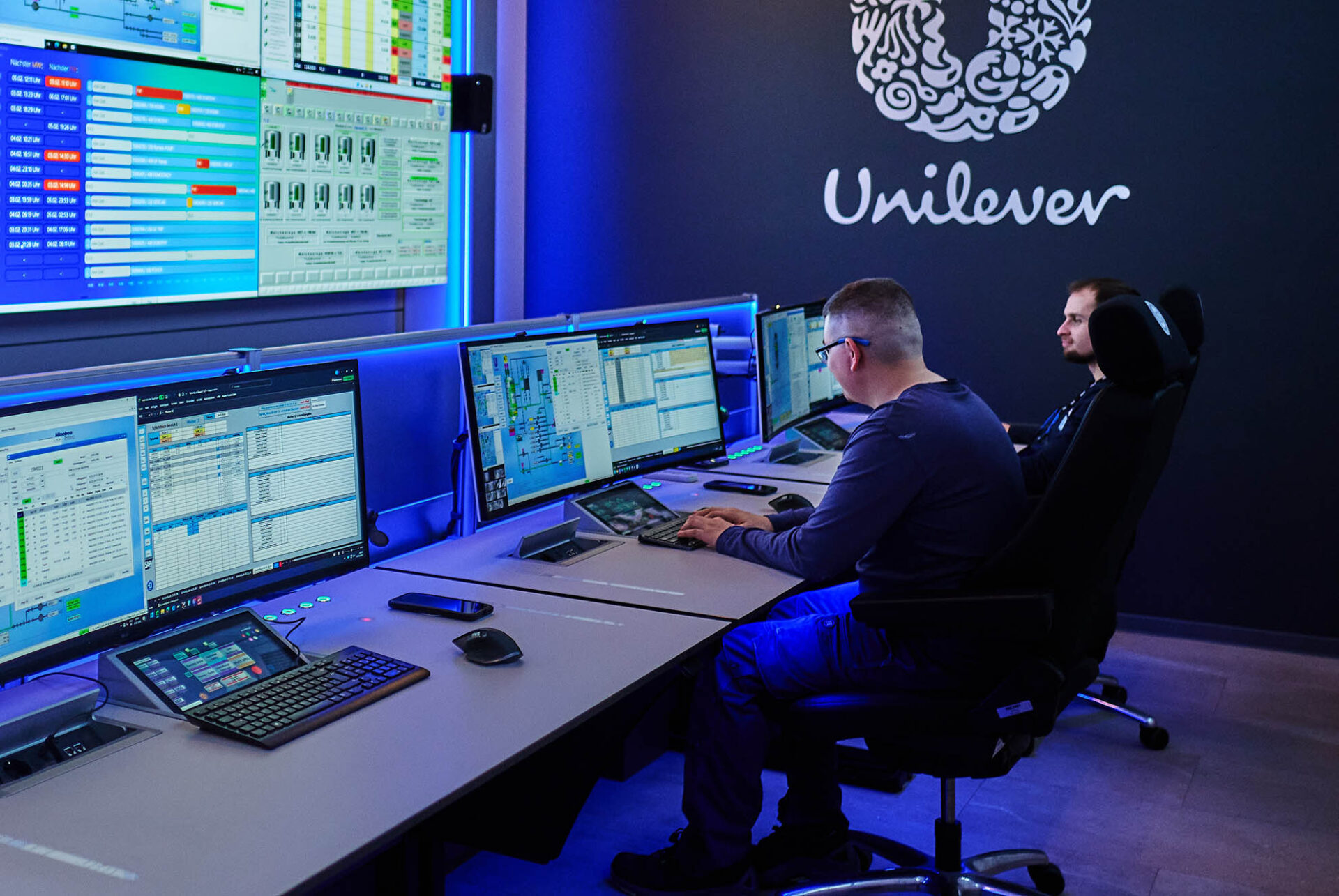
The basis for the automation initiative at the Unilever plant is a central control room. “It is the brain of our entire production,” explains Sascha Meibohm, Team Leader Site Engineering at Unilever. The days of time-consuming phone coordination and long walking distances at the Buxtehude site are over. As a result of consistent transformation steps, all process data is now centrally consolidated.
Batch process monitored end-to-end
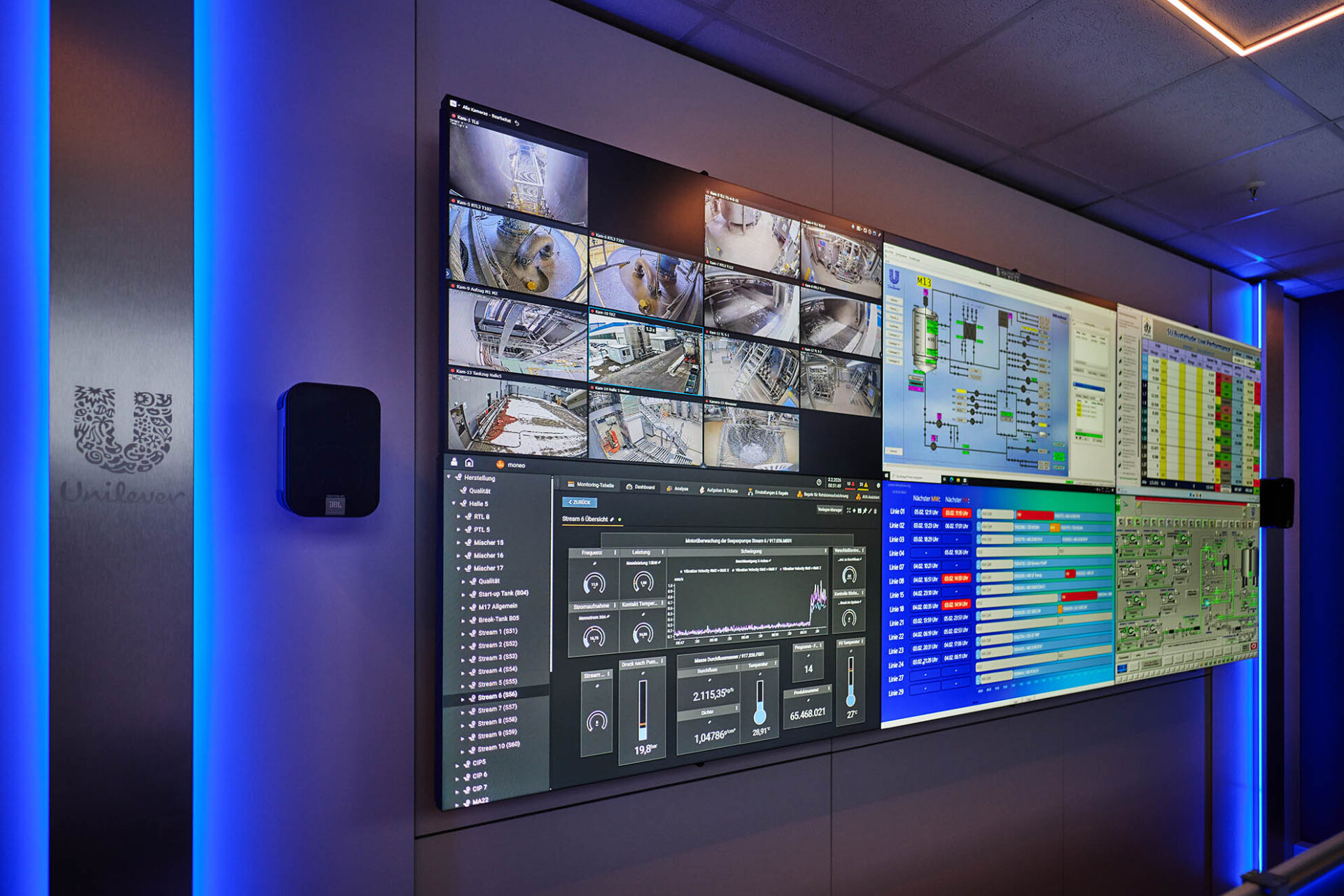
Valve positions, pump outputs, pressure and temperature values: everything is bundled, visualised and prioritised in the new control room. Recipes run precisely. Product changeovers follow a predefined matrix. Tanks are selected automatically. The control room monitors the entire process chain and intervenes directly in the event of deviations. Sascha Meibohm: “Ultimately, it is about realising the batch process end-to-end from the control room.”
Team assumes cross-system responsibility
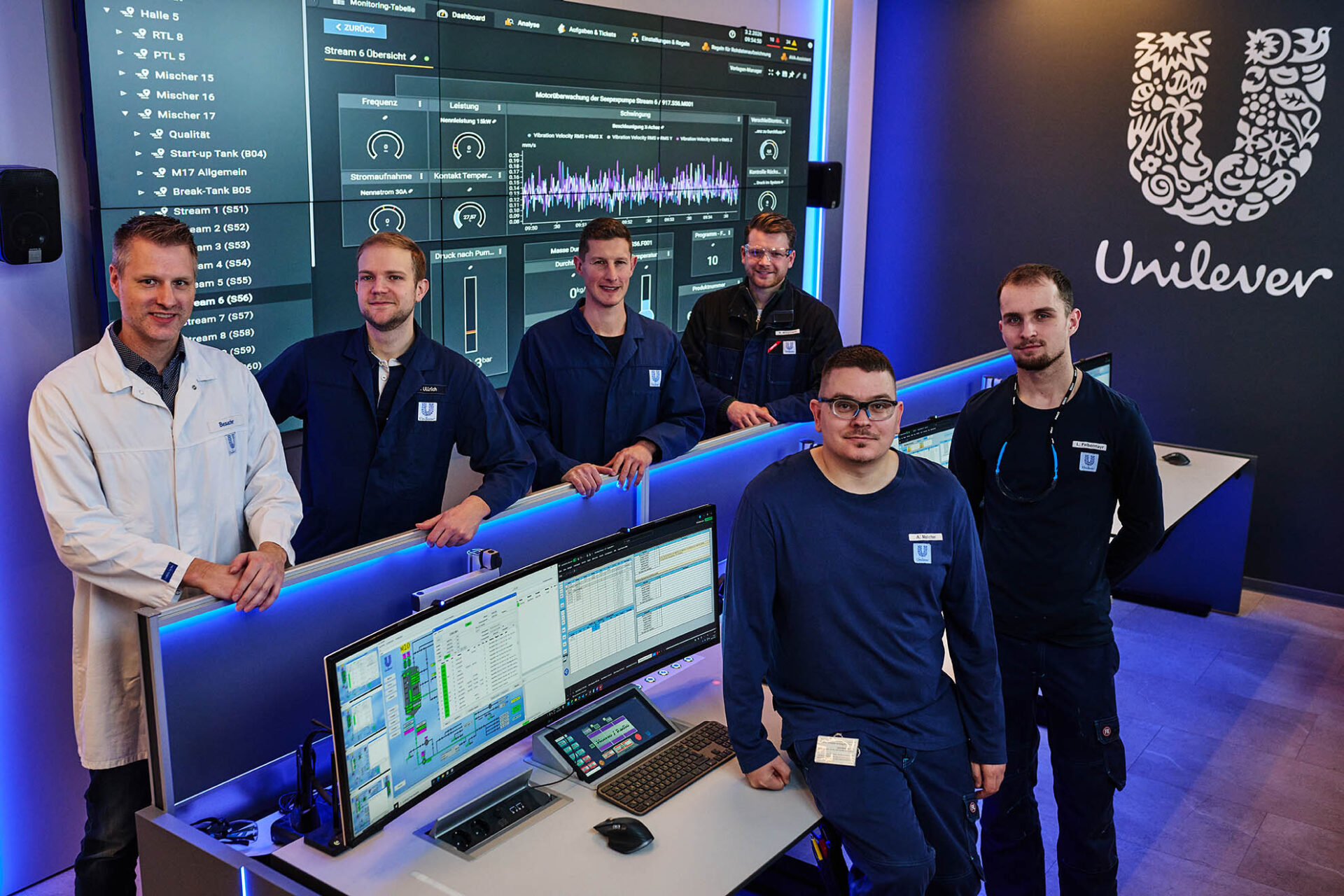
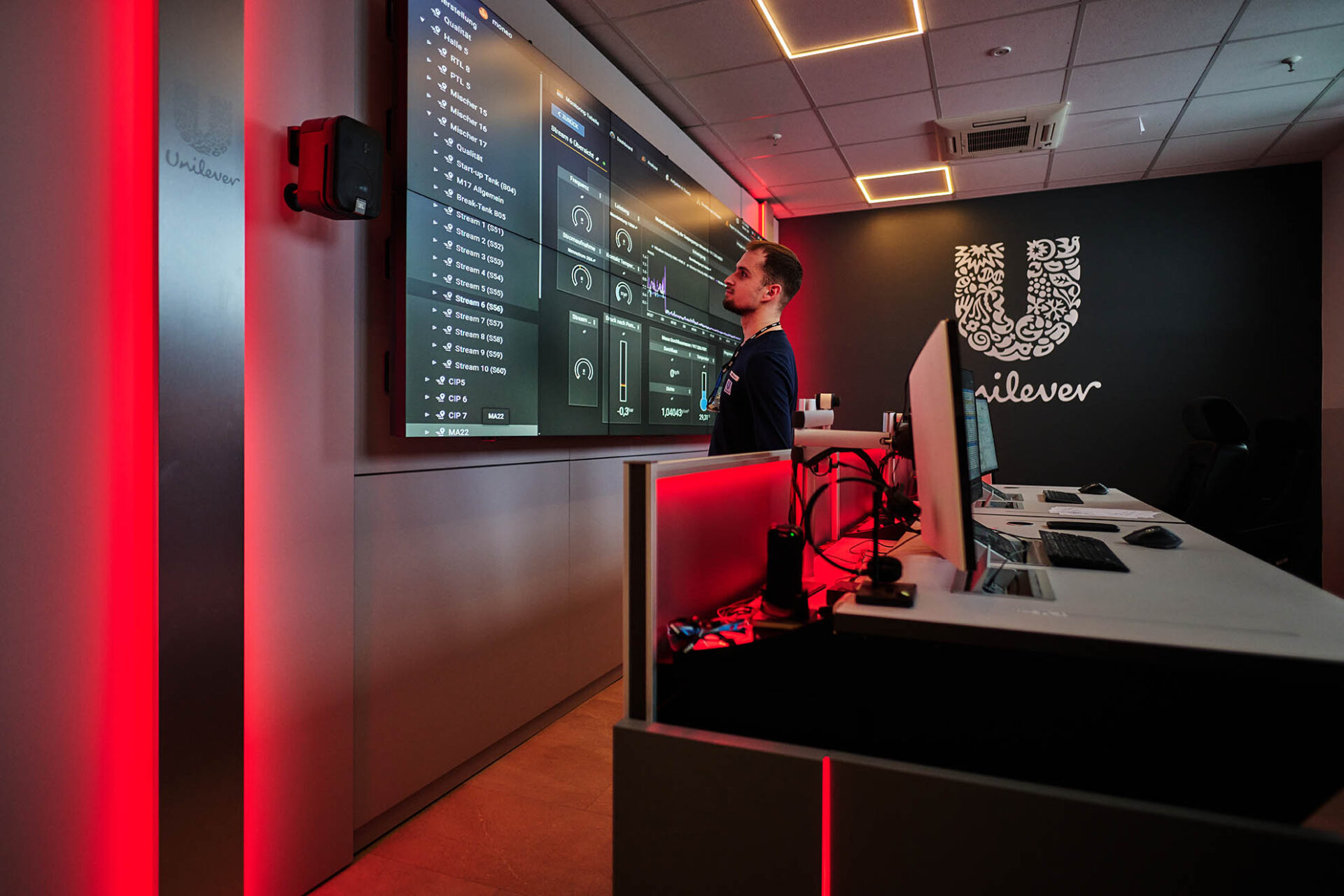
The extent to which employees’ roles have changed with the new control center becomes clear when looking at their tasks: today, the control room operator manages orders, coordinates material flows, monitors process parameters and defines measures in the event of disruptions. Only a few tasks remain directly on the shop floor. Meibohm: “The control room operator is essentially responsible until the batch has left the filler.” Decentralised plant monitoring has become cross-system process responsibility. Overview replaces walking distances. Analysis replaces pure reaction.
More than 50 sources at one workstation
The technical platform for Unilever’s realignment is the control room management system with the network-based JST MultiStreaming®. The control room must keep more than 50 sources in view. Instead of switching between individual screens, the streaming solution with its dedicated SplitView function enables these sources to be flexibly combined on a single monitor and operated directly. “This allows us to display everything the control room operator currently needs on the curved monitor of a single workstation. That is an enormous added value,” says project manager Meibohm, describing one of the many benefits of MultiStreaming.

Process interdependencies are now visible
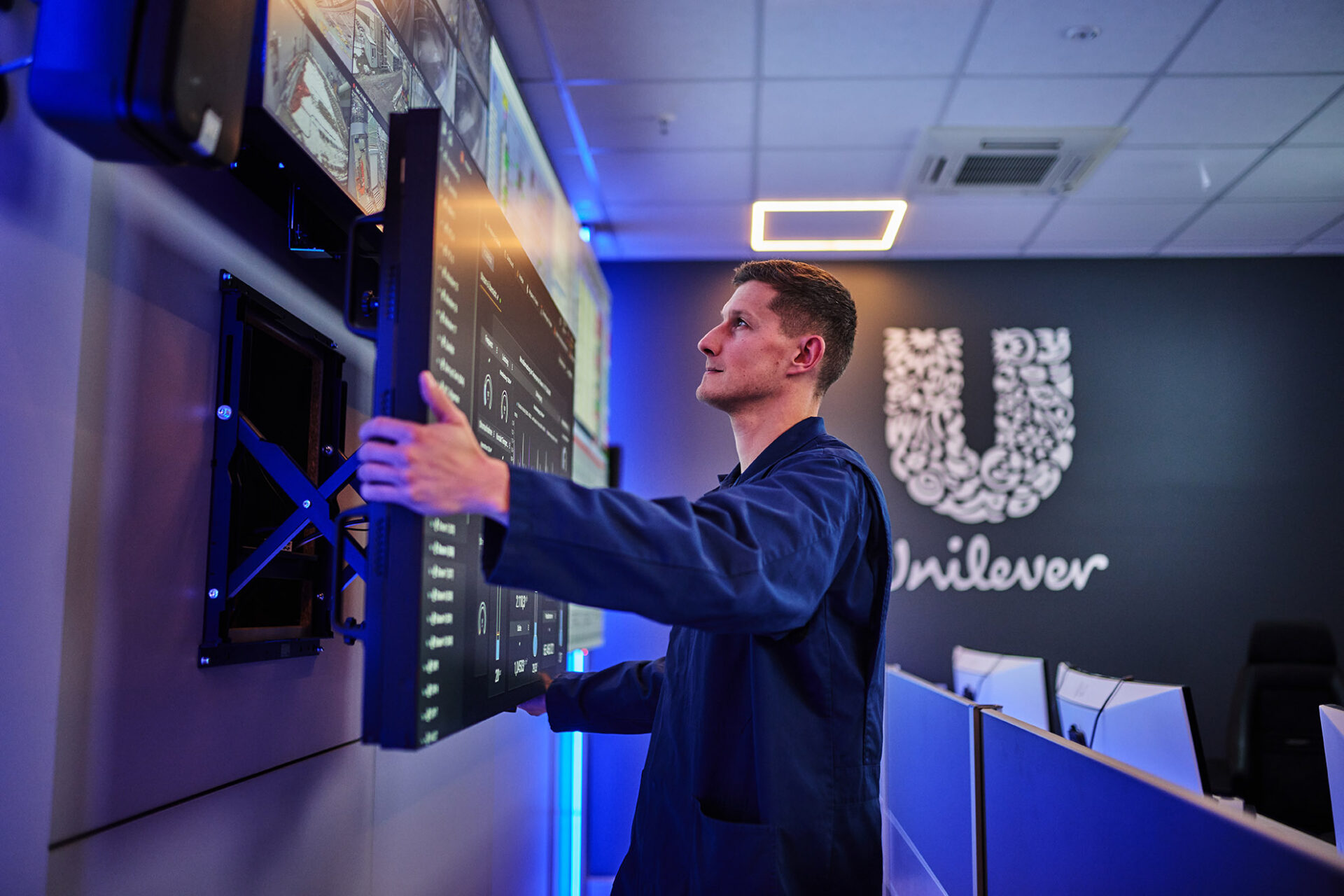
Three ergonomic Stratos X11® operator consoles, a central DisplayWall and intelligent alarm functions ensure that disruptions are not overlooked. Messages are prioritised and interrelationships made visible.
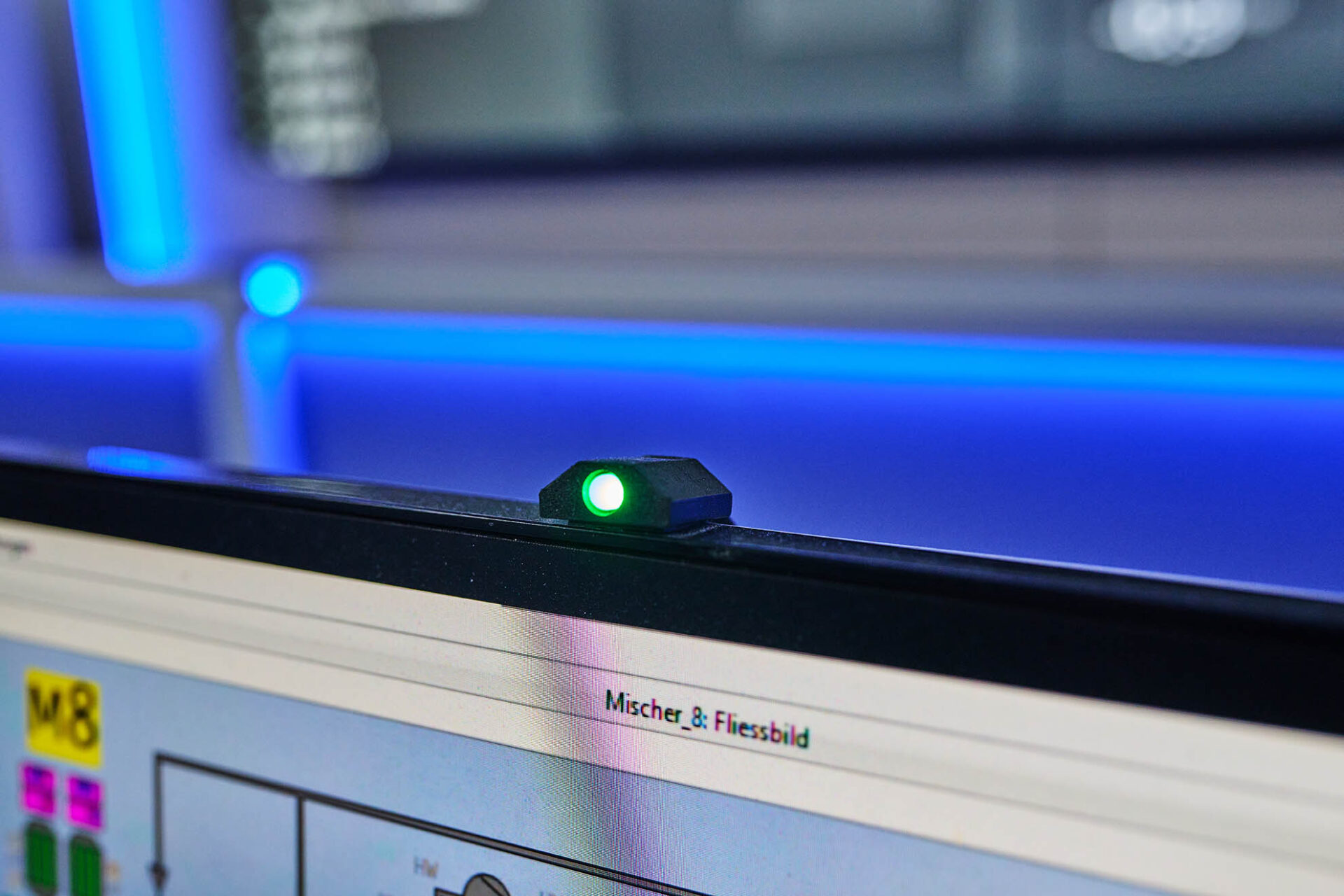
With PixelDetection®, Unilever enhances visual process monitoring with an additional layer of security. The software continuously analyses defined screen content for pixel changes and detects status changes or fault messages in real time. The digital early warning system automatically prioritises and reports critical conditions – regardless of whether the operator is actively viewing the respective screen.
Convenient handling with high security
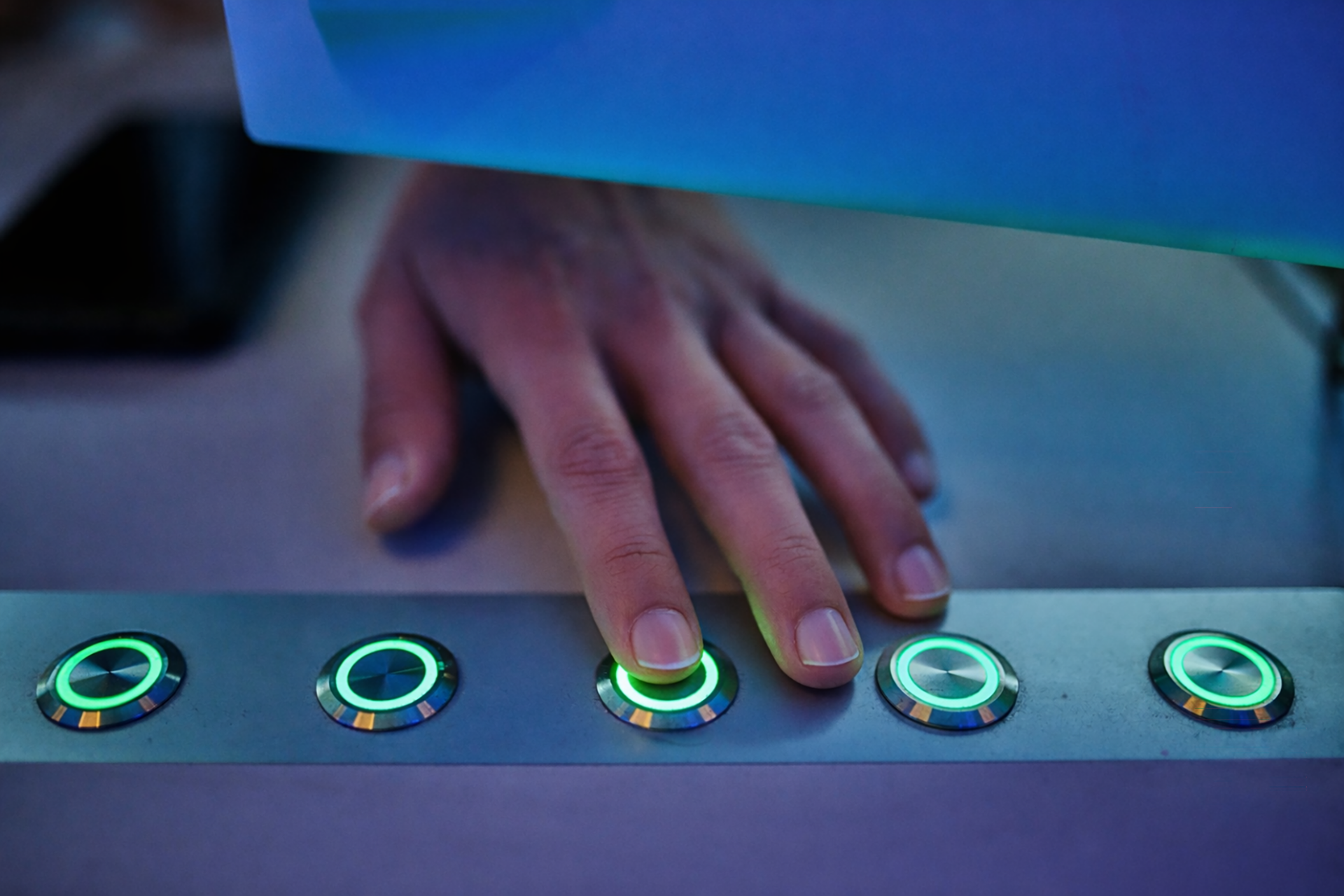
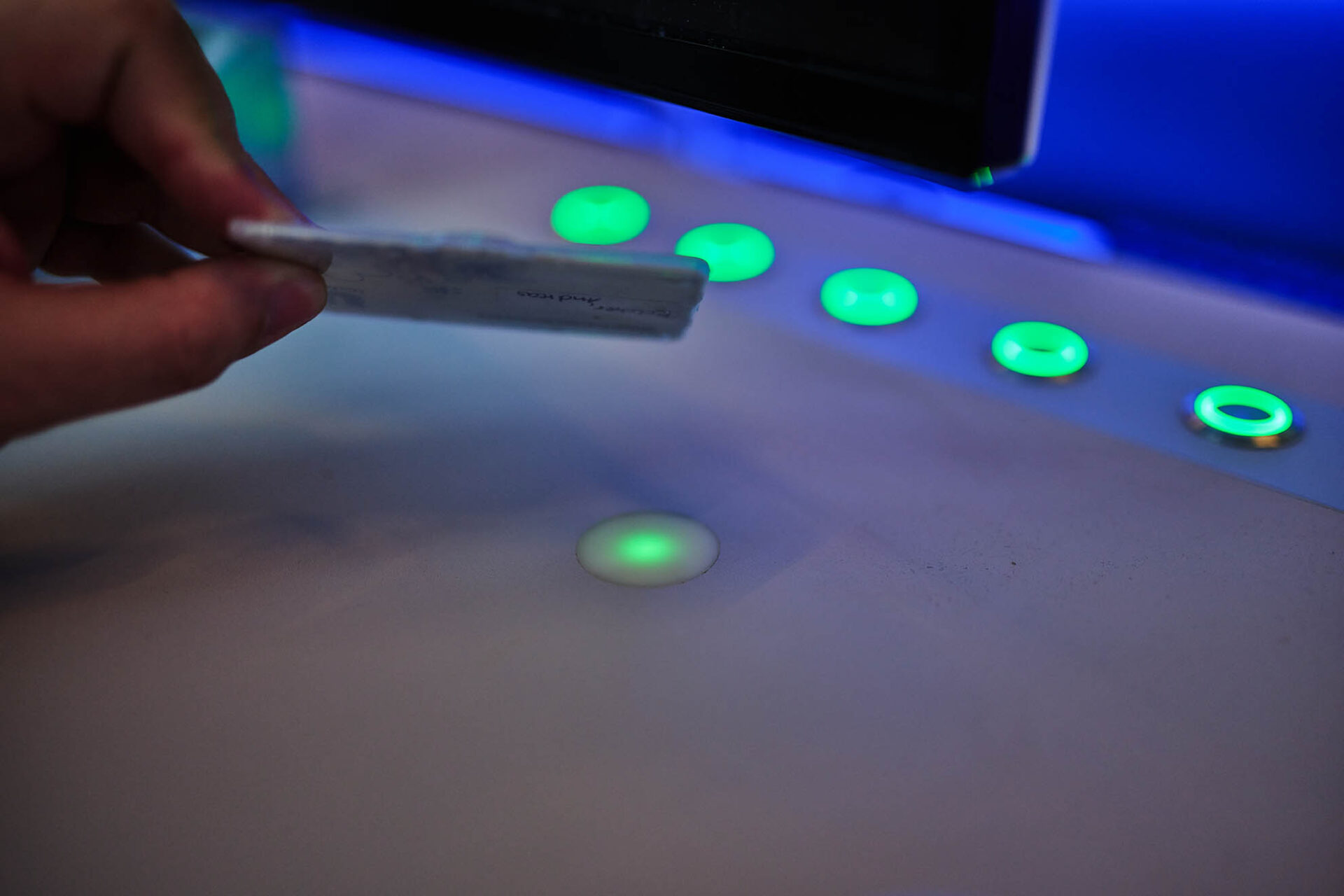
This security concept also includes the myLogin® system, which ensures a login process within seconds using the company ID card. A single card impulse is sufficient – and the workstation adapts to the respective control room operator. myLogin® provides background security and enables smooth shift changes – without manual login and logout processes or open user sessions.
Control room as the central automation hub
Taken together, the consistent interlinking of JST components creates a control room that serves as the central control instance for automation. Modern monitoring technology is used as a highly available system for the entire production operation. Team Leader Sascha Meibohm sums up: “The technical switch we implemented with the control room was what made the organisational transition to automated processes possible in the first place.”



Our references today (selection)
A
B
C
E
H
I
M
N
P
R
S
- s.Oliver, Rottendorf
- SachsenEnergie, Dresden
- SAG, Berlin
- SAG, Nürnberg / Nürnberg Messe
- Salzgitter Flachstahl
- Senvion SE, Osterrönfeld
- SGL Carbon Group, Bonn
- SIEMENS
- SIEMENS, Wegberg
- Spenner, Erwitte
- Städtische Werke Magdeburg
- Stadtwerke Gießen
- Stadtwerke Ratingen
- Stadtwerke Schwerin, Kraftwerk Süd
- Stadtwerke Steinburg GmbH, Itzehoe
- Stadtwerke Wolfenbüttel
- Starlim Sterner, Marchtrenk
- STORAG ETZEL, Friedeburg
- Straßenverkehrsamt Frankfurt am Main
V
W
Unsere Referenzen (Archive)