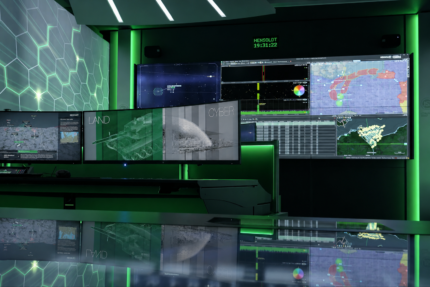
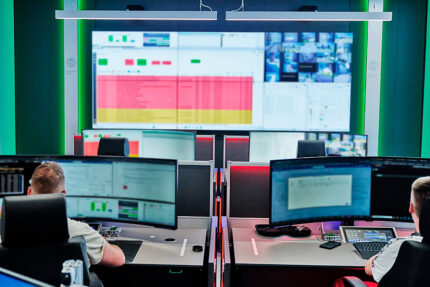
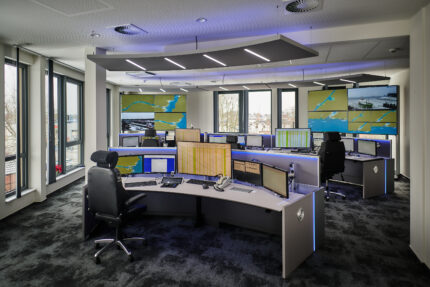
Drones over critical infrastructure, hybrid attacks and cyber risks: Europe’s security architecture is facing new challenges. Klüh Security has aligned its alarm receiving centre and emergency call and service control center in Meerbusch with this changing threat landscape. Together with JST – Jungmann Systemtechnik®, it has created a high-availability working environment as part of a concept based on regional partners, European technologies and partners from secure third countries.
“Buy local” - just on a larger scale
In the supermarket, the principle is familiar: buying locally helps keep transport routes short and supply chains reliable. Sven Horstmann, Managing Director of Klüh Security, applies this principle to a more sensitive context: “In food retail, the focus is on regional products. We too have chosen regional partners who meet our requirements.”
For Horstmann, there is no doubt: when it comes to assessing and processing sensitive data and alarms, the choice of technology and service providers becomes a strategic decision. Klüh therefore relies on partners from Europe and secure third countries. As a control room specialist based in northern Germany, JST fits directly into this concept.
Security requirements are converging
At the outset of the planning process, the key issues were a shortage of skilled personnel, price pressure and the question of where the security market was heading. This development is also reflected in Klüh’s range of services: guarding sensitive facilities, including German Armed Forces sites and airports, is part of its core business, alongside control center services and security technology. “Cybersecurity and physical security are increasingly converging,” Horstmann observes, describing the growing pressure to act.
Russia’s war of aggression against Ukraine, hybrid attacks and drone incidents over critical infrastructure have accelerated this development. At the same time, the KRITIS Umbrella Act, in force since March 2026, underlines the importance of site protection and resilience to failure. “We want to offer a solution for these potential hybrid attacks,” says Horstmann.
From security services to a digital business model
In 2025, Klüh Security celebrated its 75th anniversary and commissioned its integrated AES/NSL in the same year. Decades of experience in manned security services thus meet a digital and scalable business model.
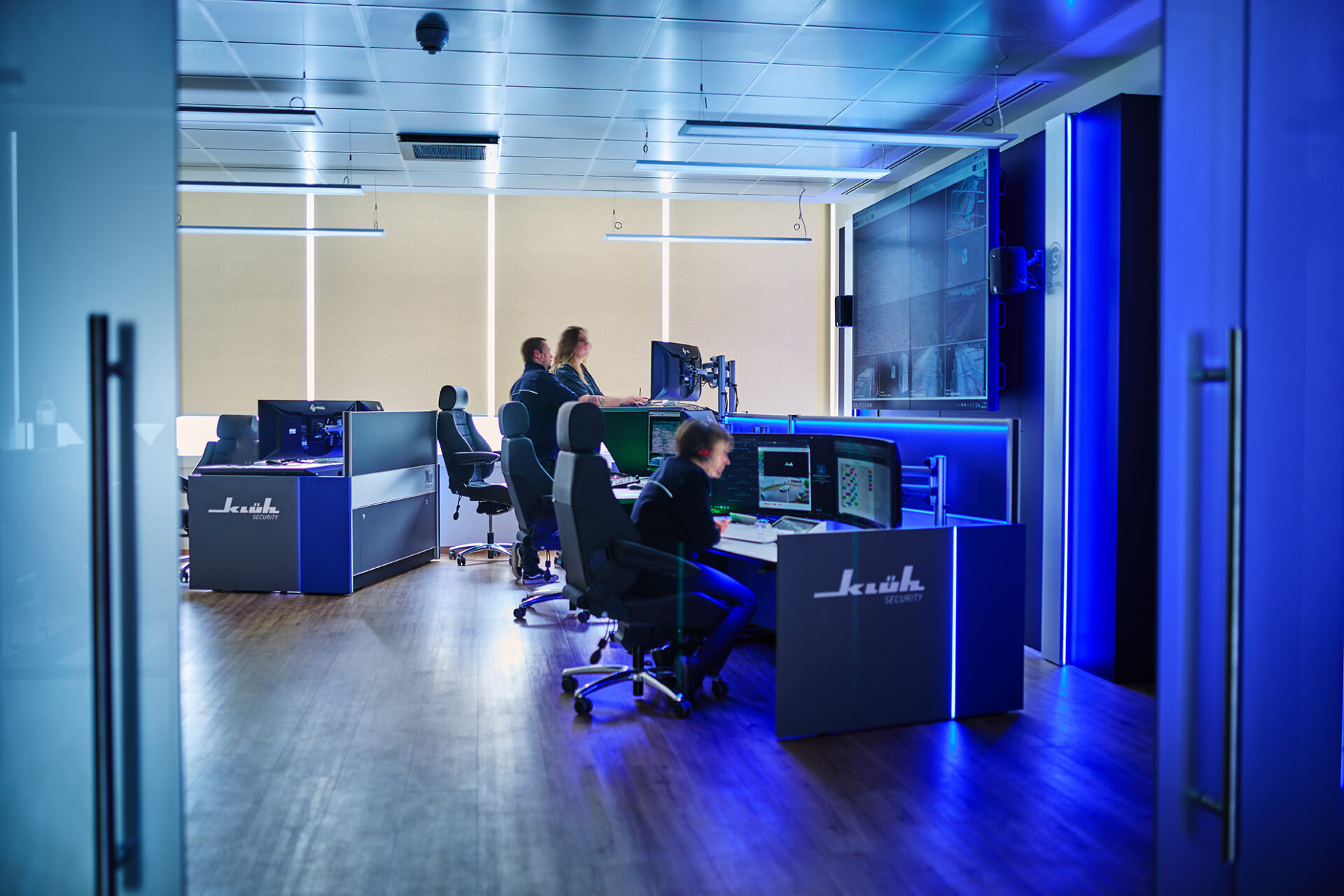
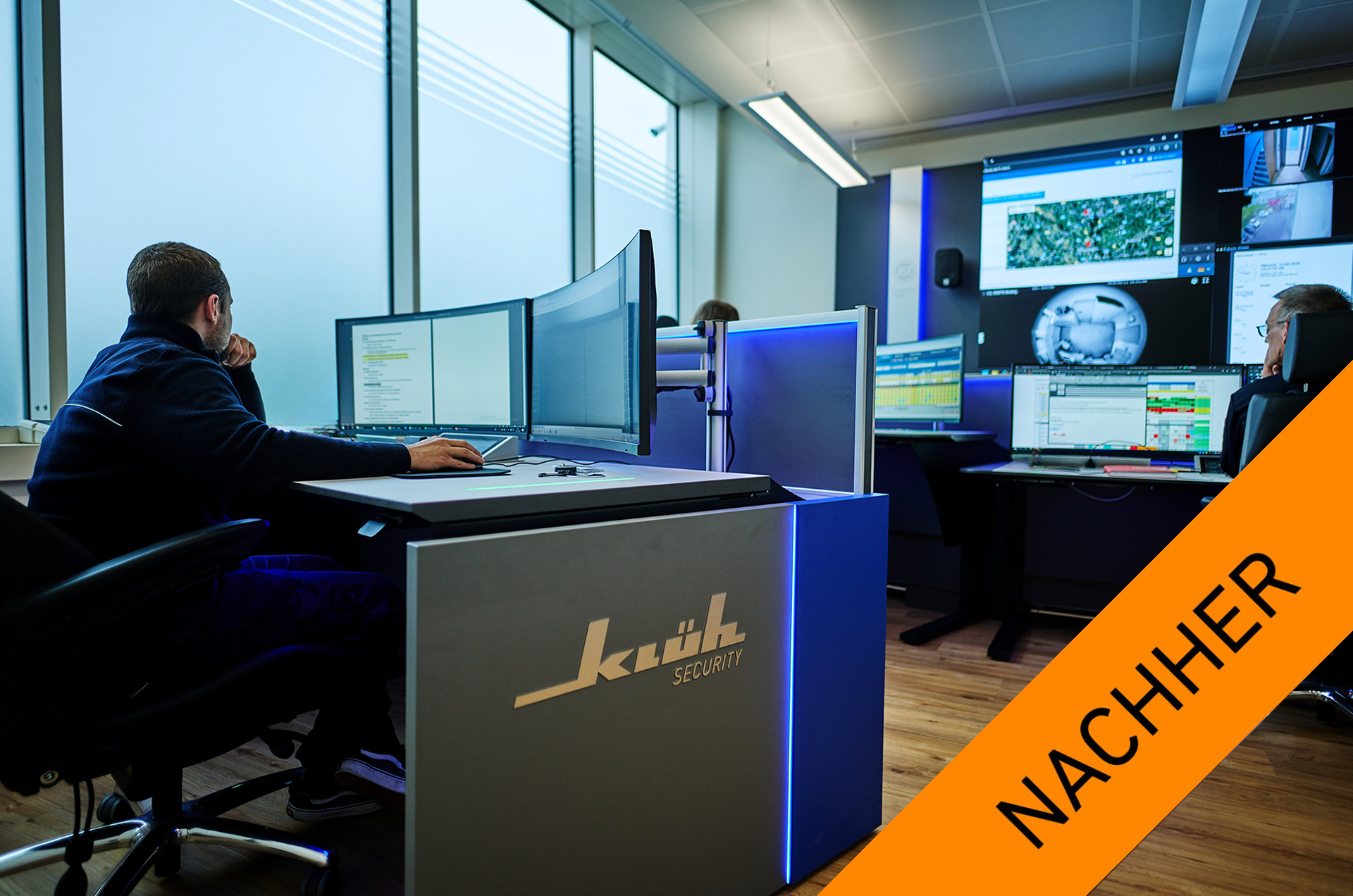
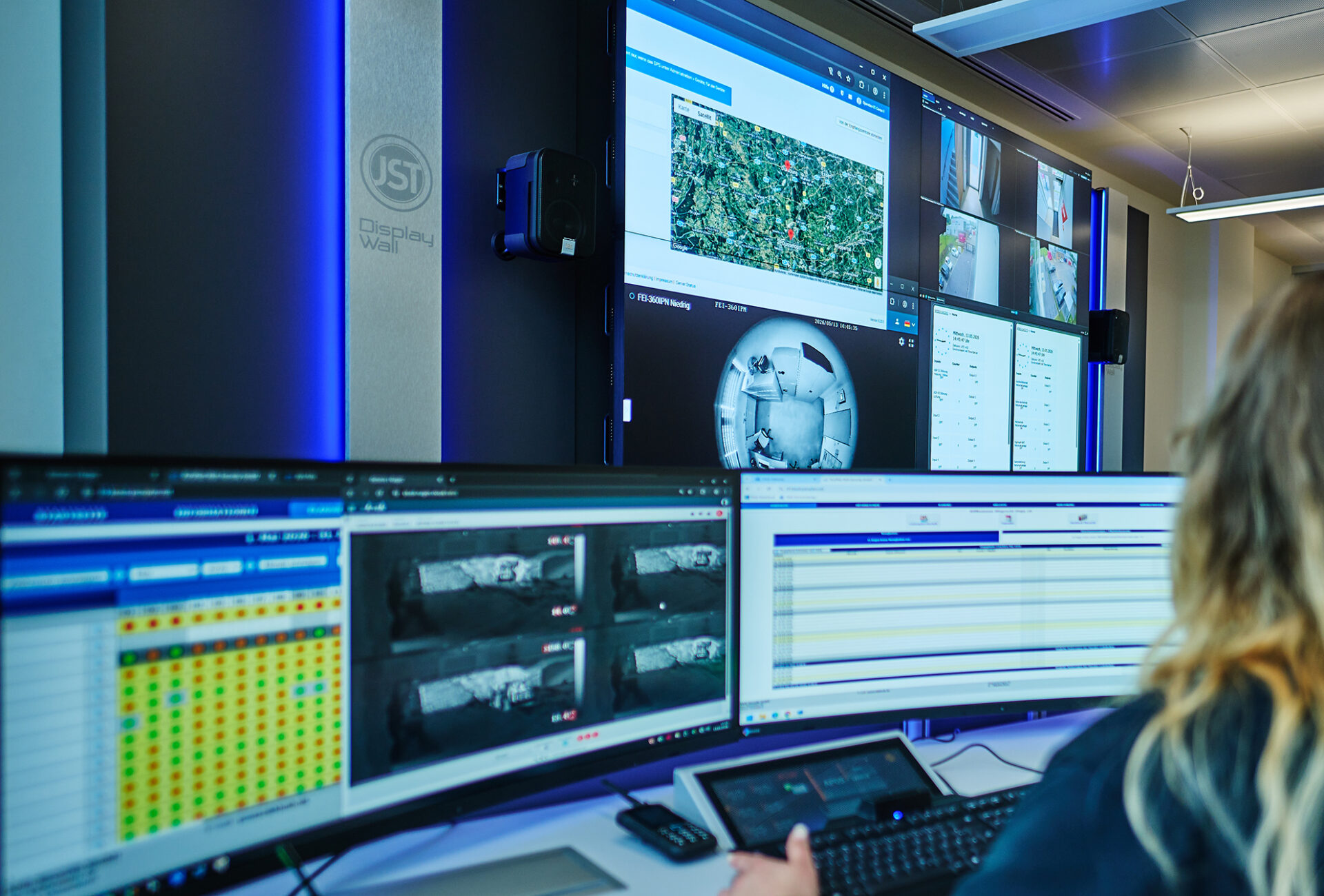
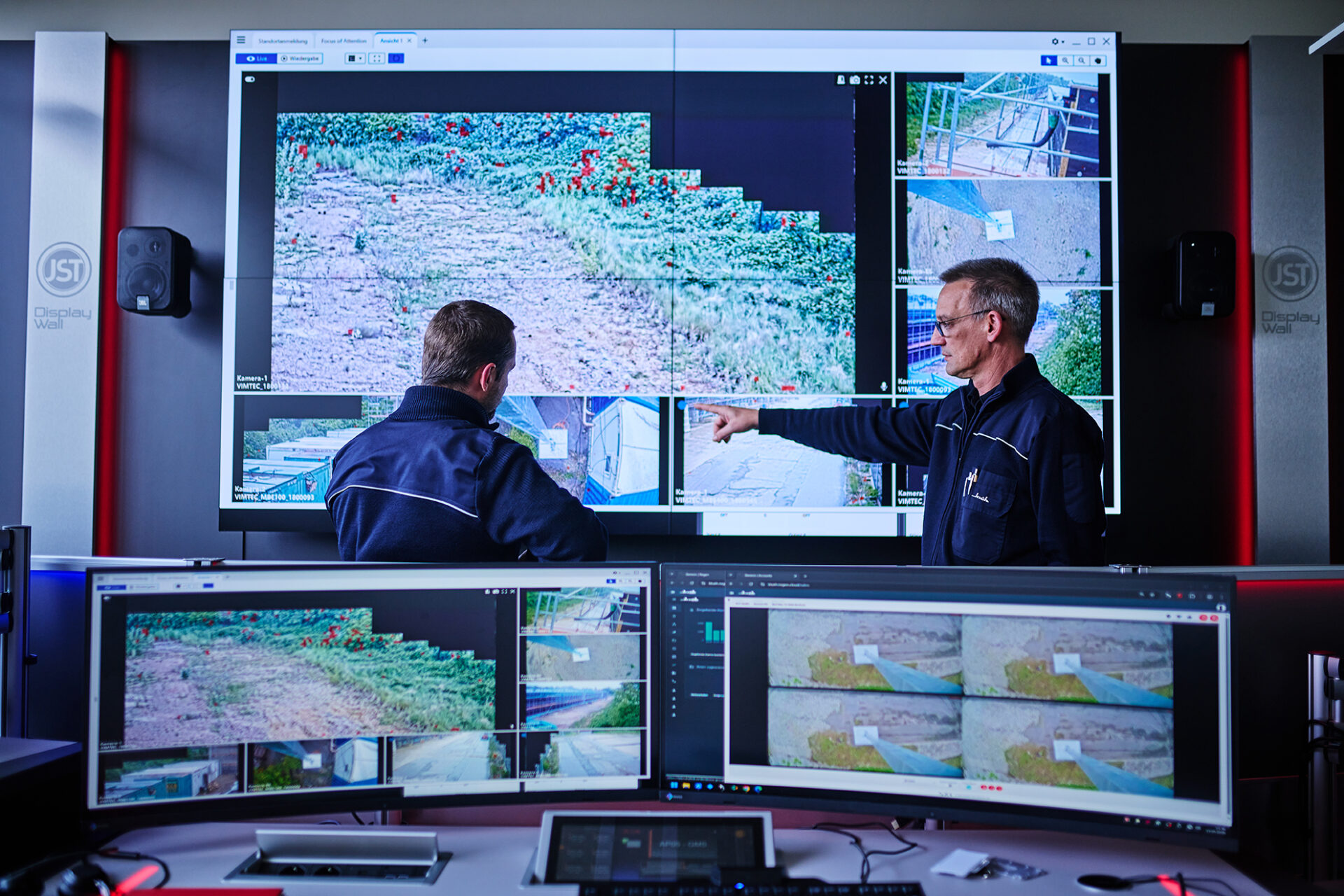
The certified control center is staffed around the clock. Reports of fire, sabotage, power outages or unauthorised data access must quickly be turned into a clear situational picture. More than 550 interfaces connect customers’ existing systems to the open integration platform.
“We can integrate building automation, sensor technology, IoT and hazard management systems at our customers’ sites into our control center,” Horstmann explains. Customers gain access to this infrastructure as a managed service, without having to establish their own control center complete with staff, system integration and certified processes.
Data sovereignty is not a luxury
To protect against outages, Klüh opted for two independent data centres with identical technology and a failover concept. If one site fails, the system can switch to the redundant infrastructure. The company deliberately chose not to rely on an external partner control center as a backup. “We want to retain data sovereignty,” Horstmann stresses. “The data stays with us.”
The control center’s IT infrastructure is operated autonomously and on premises, independently of the rest of the company’s IT. The computing equipment is separate from the actual workstations.
JST makes the virtual system environment user-friendly
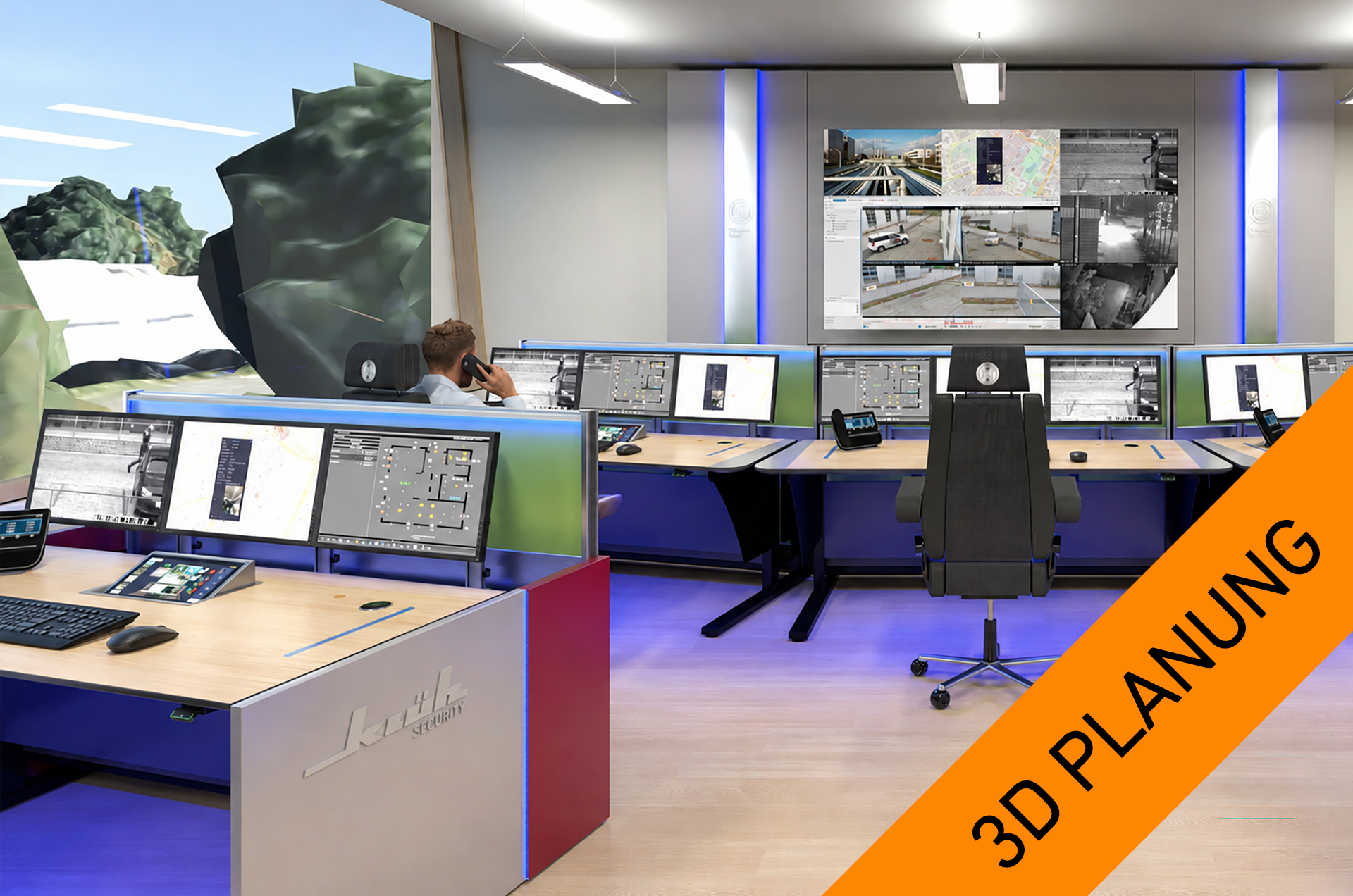
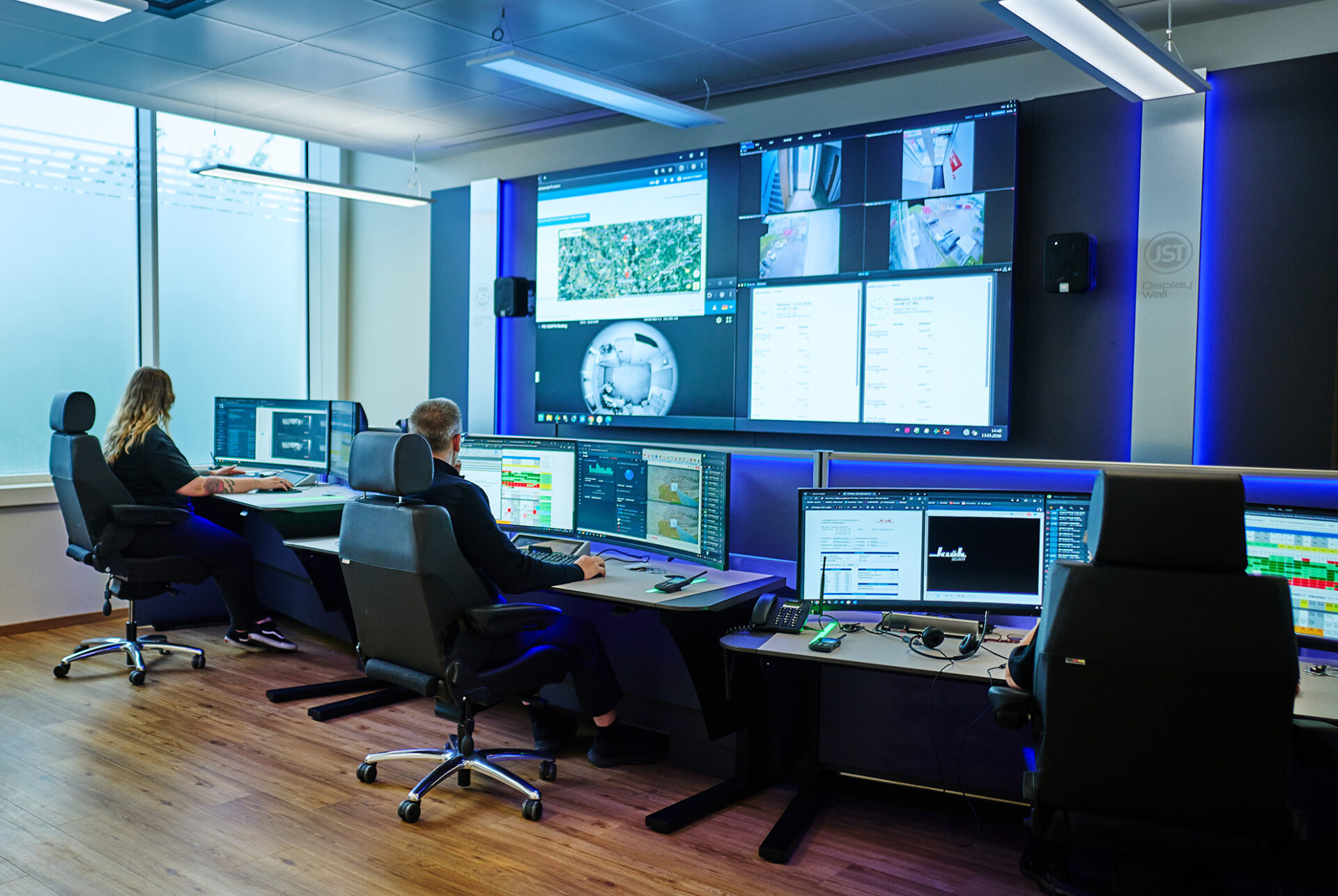
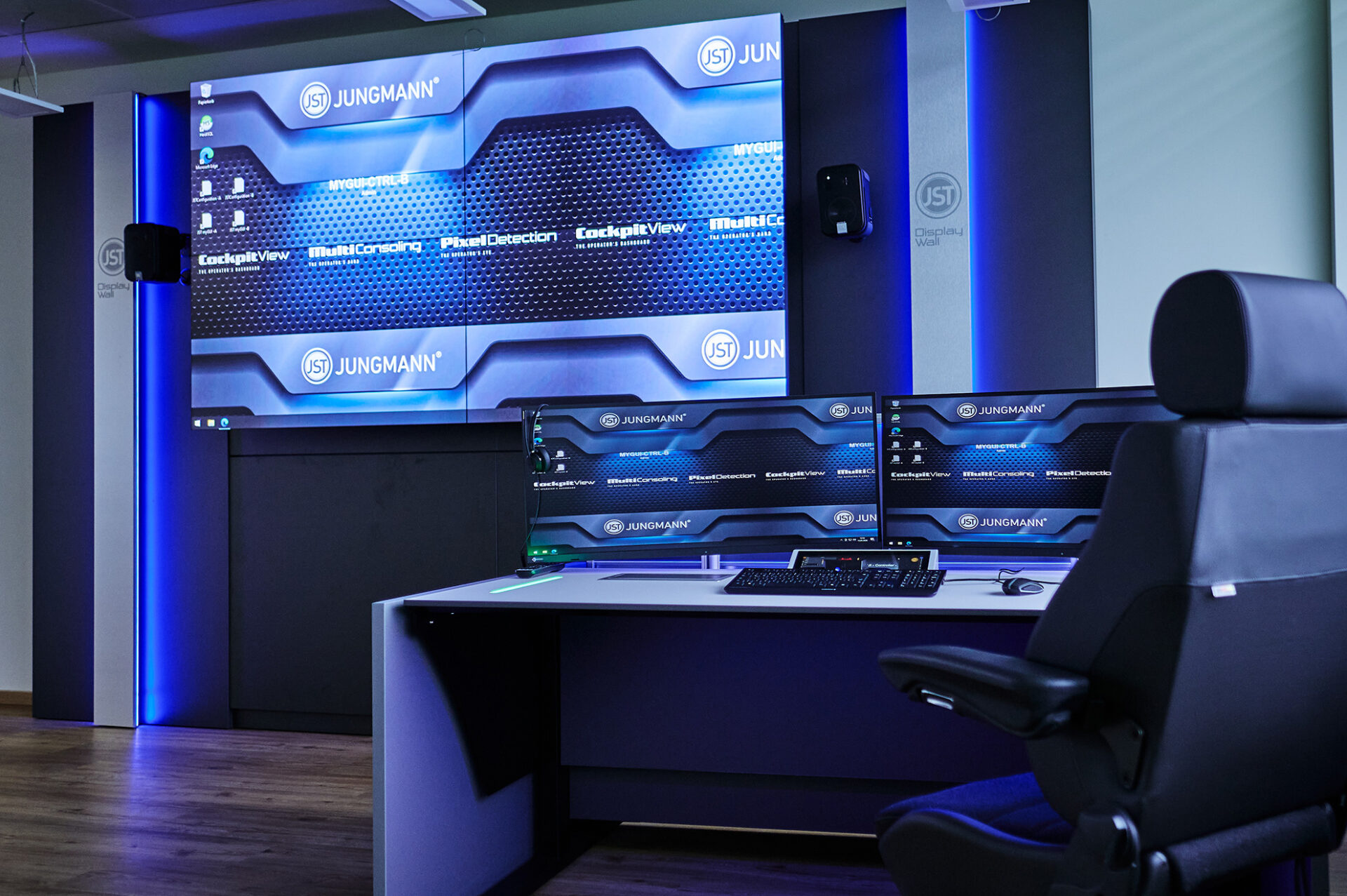
Because the applications run on virtual machines in the data centre rather than on desktop PCs directly at the consoles, Jungmann provides the crucial interface: JST MultiStreaming® gives staff direct access to the virtualised sources at their workstations and on the large display wall, with virtually no latency and high availability. All applications are operated using the self-explanatory myGUI® interface. Its 3D representation of the actual control center helps operators navigate quickly and confidently.
Marcel Sagemüller, Head of Organisation and project manager for the control center, sums it up: “The whole transition from physical, tangible hardware sitting under the desk to a highly virtualised environment went extremely well and very quickly.” The benefits are also evident in day-to-day operations: employees log in with a smart card using the myLogin® software, and their screens and applications start automatically with their personal configuration. “It is also very intuitive, of course, because you simply place your card down to log in – there are no problems at all,” Sagemüller confirms. Employees also choose their own individual screen and console settings: “That works perfectly.”
The JST team contributes ideas and makes adjustments
Klüh was not looking for a supplier of individual components, but a partner for an integrated control room solution. “The overall concept and visualisation were important to us,” Horstmann explains. “Of course, JST’s experience with control center technology was also decisive.”
Just how well this experience stood up under pressure became clear during the planning phase: when Klüh revised its control center concept several times and reduced the originally planned number of workstations, JST had to make adjustments at short notice. Horstmann recalls with a smile: “I don’t think we were the easiest customer, because we kept reconsidering things. But the JST staff, particularly Dominik and Sina, always responded very quickly.”
Scope for expansion and scalability
This flexibility does not end when the new control center enters service. Looking to the future, its capacity can be doubled as business grows, and new applications can be integrated. “Scalability is important to us,” Horstmann emphasises. “We need to be able to grow with our business and with new innovations. JST is a good fit for us in that respect.”
The Meerbusch control center shows how Klüh limits technological dependencies and safeguards its ability to act. JST provides the operational layer that makes a complex system environment easy to navigate and flexible to use. This gives the idea of buying locally a new dimension: it is also about whom you entrust with sensitive data, critical processes and your own ability to act.
„Bei Klüh ging es von Anfang an nicht um einzelne Komponenten, sondern um ein Gesamtkonzept, das Sicherheitsanforderungen, Bedienbarkeit und zukünftiges Wachstum zusammenführt. Entscheidend war, die Leitstellenumgebung so zu planen, dass sie exakt zu den heutigen Abläufen passt und zugleich offen für neue Anwendungen und weitere Entwicklung bleibt.“
Dominik Zepp
Sales Consultant, JST
„Technisch ist dieses Projekt besonders spannend, weil hinter den Arbeitsplätzen eine hochgradig virtualisierte und redundante Infrastruktur arbeitet. Unsere Aufgabe war es, diese Komplexität für die Operator praktisch unsichtbar zu machen – mit direkten Zugriffen, klarer Bedienung und einer Architektur, die auf hohe Verfügbarkeit ausgelegt ist.“
Maia Shekriladze
Head of Customer Service, JST