




When every second counts: An integrated concept for the “Leitstelle Deutschland”
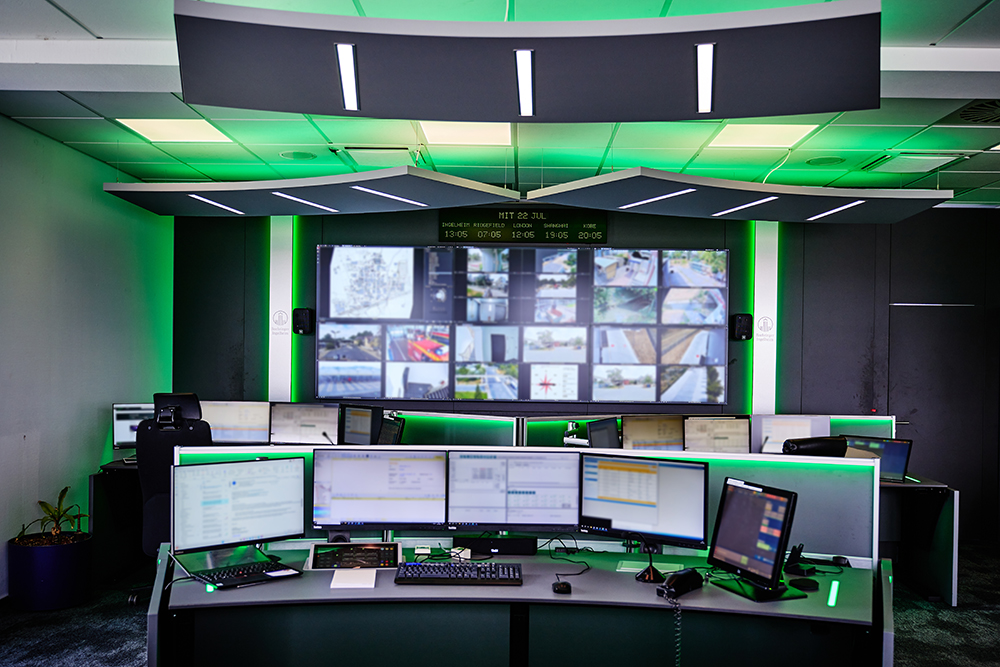
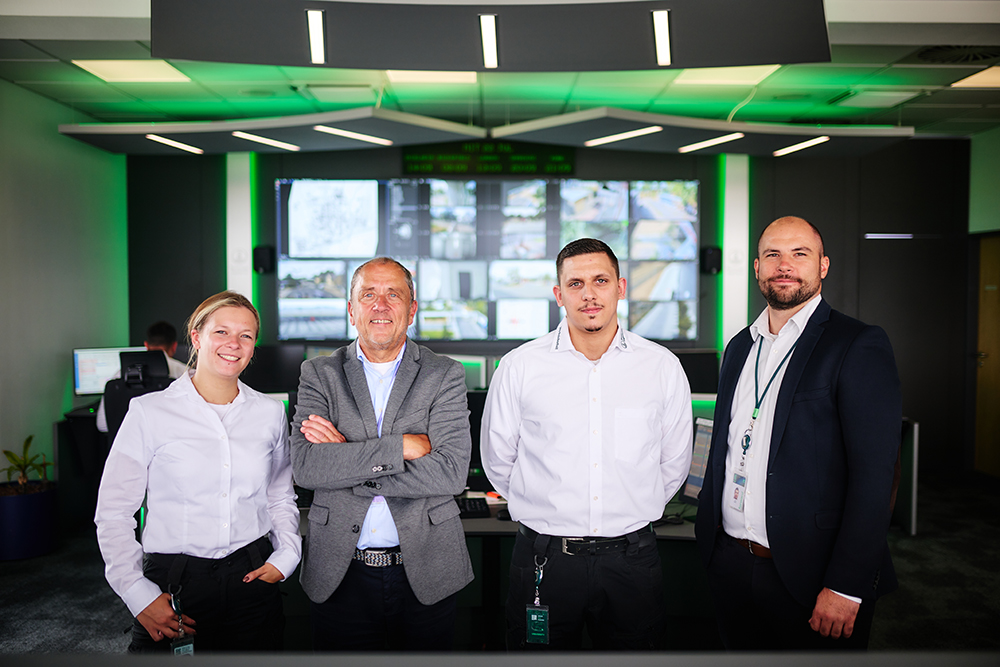
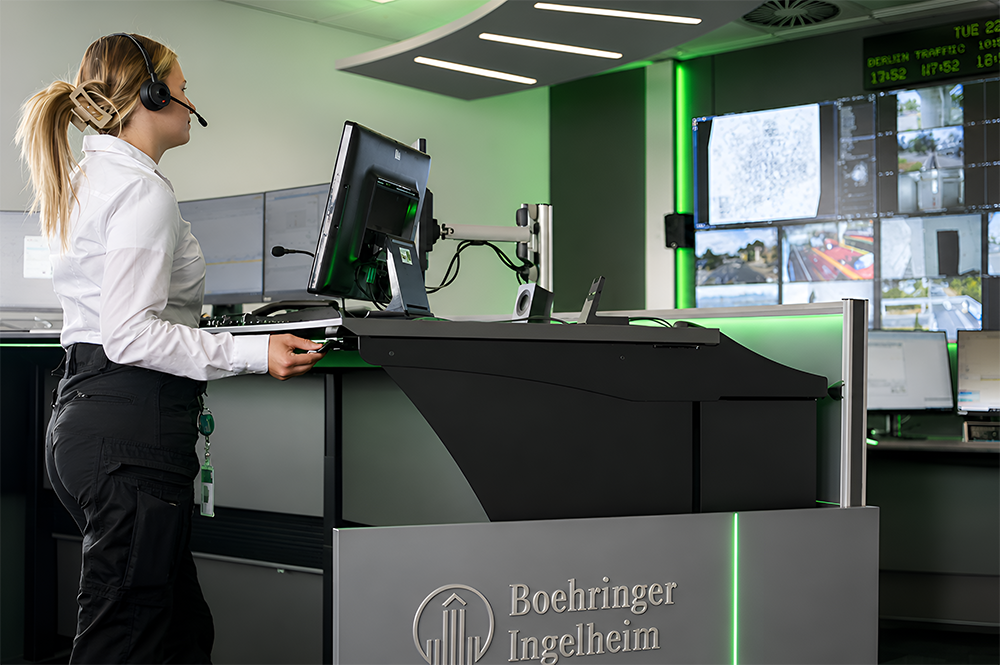
An alarm comes in. Within a very short time, it must be clear which emergency response teams are needed, which information is relevant and what steps need to follow. At Boehringer Ingelheim’s security control center in Building 2112, key tasks are brought together for this purpose. Working with the control room experts from JST – Jungmann Systemtechnik®, the pharmaceutical company has implemented an integrated concept for its “Leitstelle Deutschland” (Control Center Germany). The site fire brigade, emergency medical services and site security are alerted and coordinated, while building management systems are brought together.
Just three workstations are sufficient to control an entire landscape of systems – from the emergency dispatch system and video management system to operational applications. Centralised operation is designed to support fast yet structured responses in safety-critical situations.
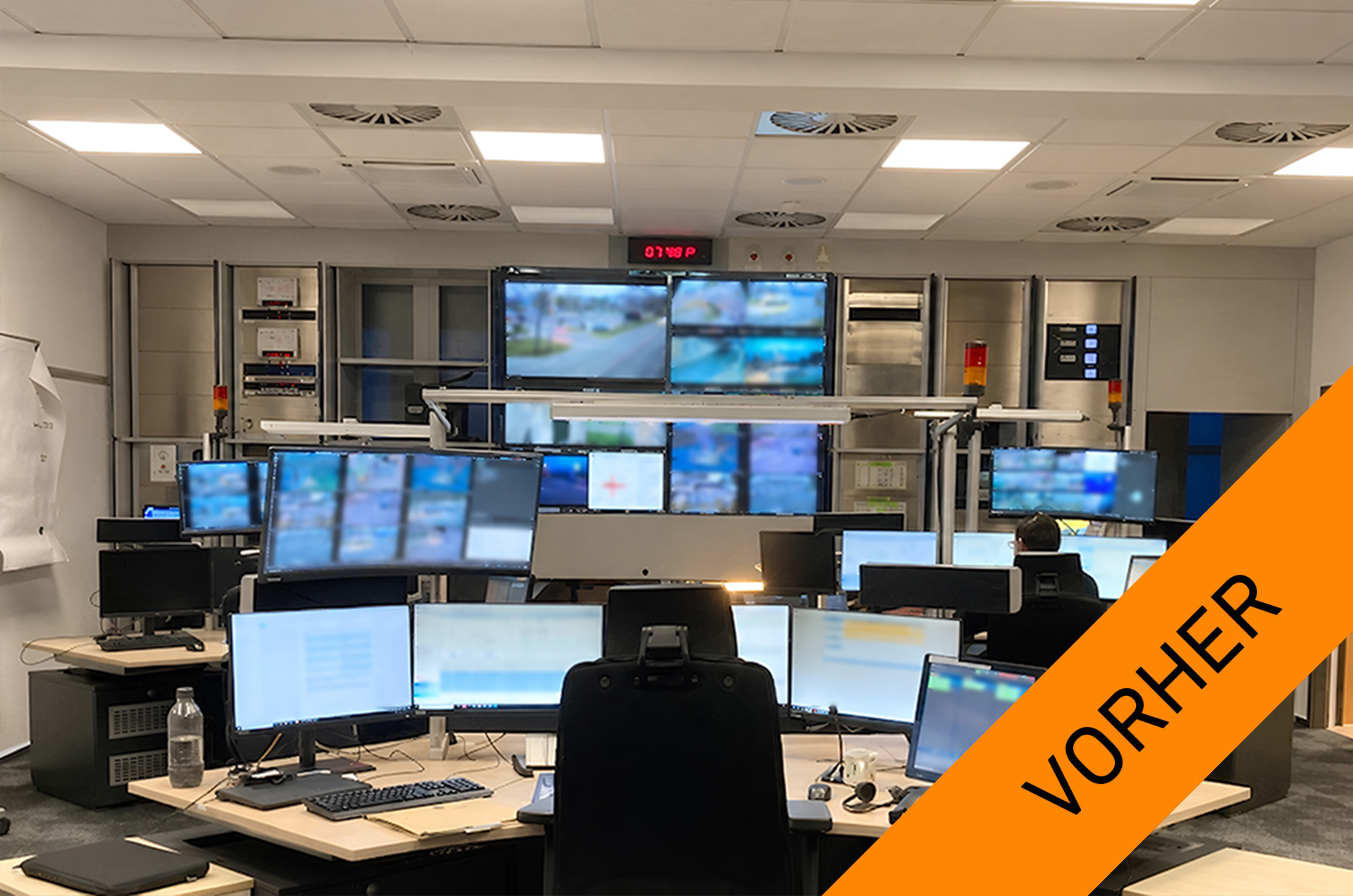
Many systems, increasingly bogged down in the details
The initial situation was typical of control center environments that have evolved over time: As additional systems, programs, computers and monitors are introduced, the demands placed on the people at the workstations also increase. “At some point, you find yourself with a system landscape where you can no longer act quickly and get bogged down in all the little details”, explains project manager Jonas Michel, describing the turning point.
“More monitors are better” is not necessarily the right answer, says Michel. What matters instead is fundamentally rethinking the way systems are operated and integrating the existing DisplayWall efficiently into workflows.
Directly from the workstation to the DisplayWall
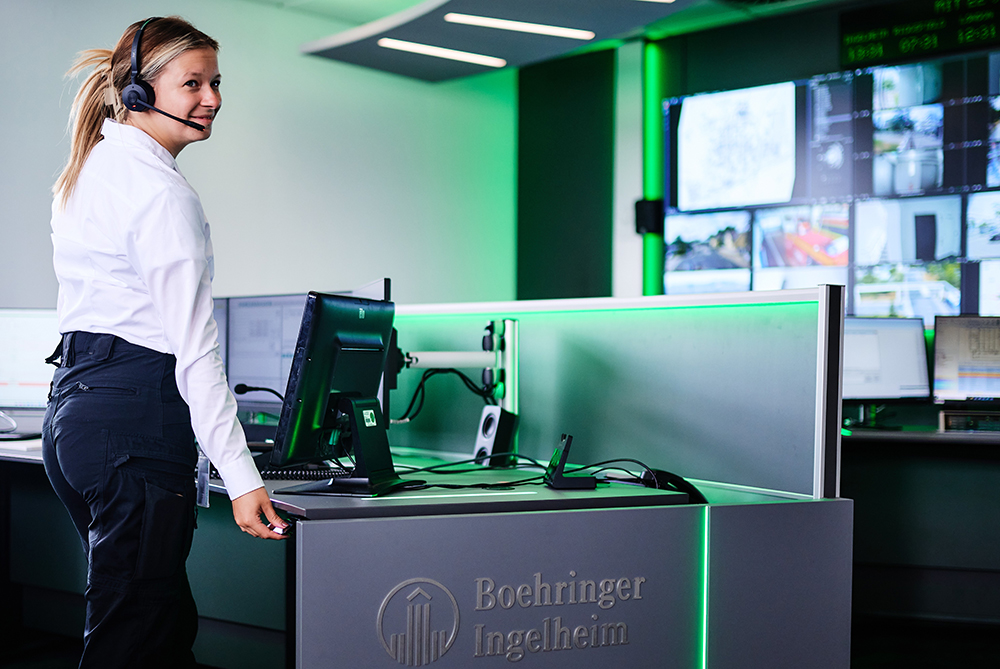
At the heart of the solution is the network-based JST MultiStreaming® system: The redundant control room management system connects workstations, systems and the DisplayWall. Employees select their sources via the intuitive myGUI® user interface and the CommandPad® integrated into the Stratos X11® control room consoles. SplitView enables customised multi-view displays. Instead of numerous input devices, there is now “just one mouse and one keyboard”, according to Michel. This makes operation “much easier” and work faster and more efficient.
One detail illustrates the new ease of operation: “You move the mouse cursor beyond the top edge of the screen – and the cursor reappears on the video wall in front of you.” Applications can thus be operated directly on the large display wall from the workstation.

More freedom in everyday work – and in training
The new operating philosophy is changing not only the technology but also everyday working life. Control Center Officer Helen Martin describes the experience from the user’s perspective: “The whole thing has simply become much more flexible, more open. You’re no longer as restricted by the system as you used to be.” Computers no longer have to be physically located at the respective workstation to be operated. This creates a more organised working environment while also expanding access to networked applications.
The benefits become particularly tangible in training. A trainee’s screen can be mirrored onto another monitor whenever required. “That means we can still monitor their work,” Martin explains, “but they have more freedom to work independently because we’re no longer sitting right behind them, looking over their shoulder.” Modern control room technology thus becomes a tool that supports both supervision and independent learning.
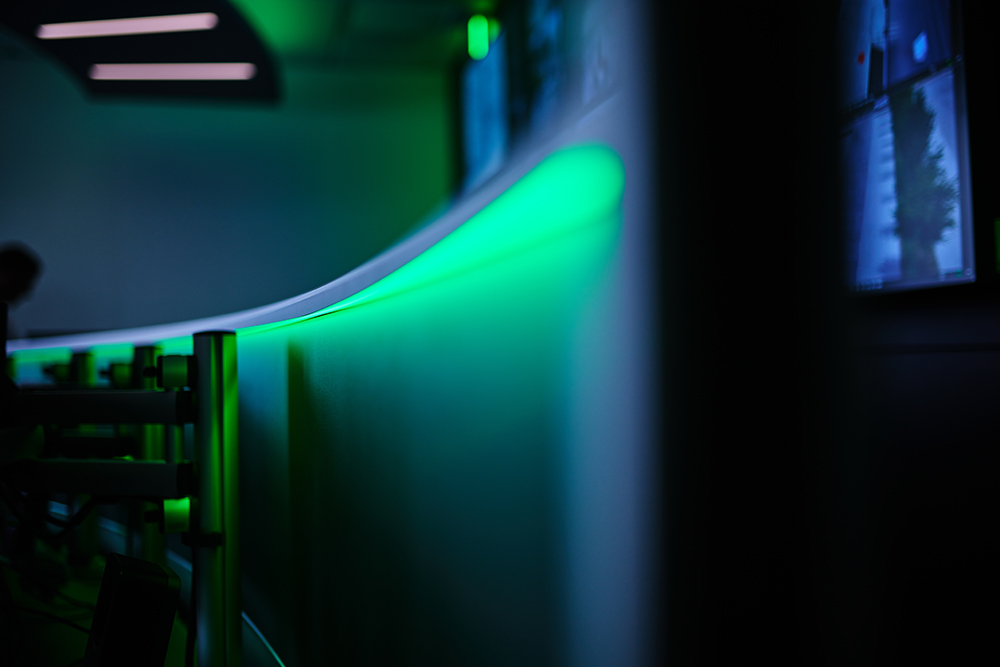
The working environment itself is also part of the concept. The curved Stratos X11® control room consoles are height-adjustable, while OPAL X11® acoustic ceiling sails optimise sound levels and lighting. Martin recalls the previous atmosphere: “Before, the lighting made the entire room feel cold.” Today, brightness, warm and cool white light and coloured ambient lighting can all be adjusted individually. A detail that makes a noticeable difference in a room where sustained concentration is essential.
Modernisation during ongoing operations: safety remained top priority
The control center must fulfil its core tasks without interruption. This made the modernisation particularly challenging. “Alerting promptly when incidents occur requires swift action,” emphasises Jonas Michel. This capability could not be compromised during the modernisation. Close coordination with the Jungmann team, thorough preparation and the shortest possible conversion times for each workstation were therefore essential prerequisites.
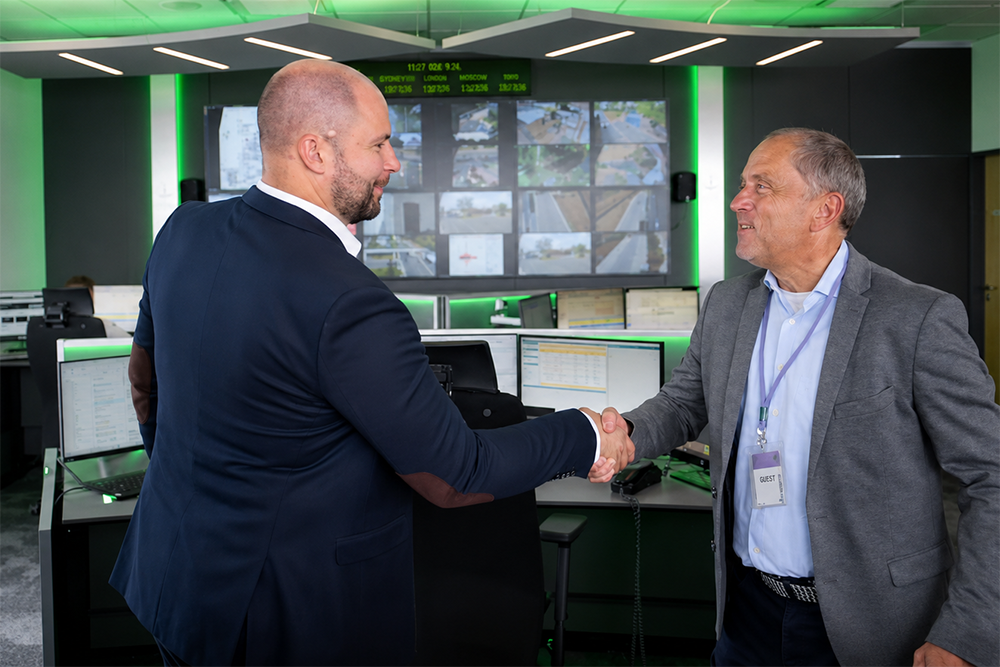
Boehringer Ingelheim also placed great importance on clarity and reliability in its collaboration with JST. Michel highlights the open communication and mutual trust: “We had no unanswered questions at the end.” For him, this commitment was also reflected in the early, transparent presentation of costs and services – an important reason for choosing JST.
Planning for the future from the very beginning
The security control center was deliberately designed to accommodate requirements beyond current needs. New systems and software can be integrated flexibly, while Boehringer Ingelheim can administer minor adjustments independently. This ensures that the control center can continue to respond effectively even as the system landscape grows.
The conclusion is correspondingly clear. “With the new technologies we now have in place, we feel ideally equipped for the future,” says Jonas Michel. Operation has become easier, and dispatchers can act and respond more quickly. The project manager sums up the mission of the security control center: “We may only be talking about seconds, but those seconds can be decisive.”




Our references today (selection)
A
B
C
E
H
I
M
N
P
R
S
- s.Oliver, Rottendorf
- SachsenEnergie, Dresden
- SAG, Berlin
- SAG, Nürnberg / Nürnberg Messe
- Salzgitter Flachstahl
- Senvion SE, Osterrönfeld
- SGL Carbon Group, Bonn
- SIEMENS
- SIEMENS, Wegberg
- Spenner, Erwitte
- Städtische Werke Magdeburg
- Stadtwerke Gießen
- Stadtwerke Ratingen
- Stadtwerke Schwerin, Kraftwerk Süd
- Stadtwerke Steinburg GmbH, Itzehoe
- Stadtwerke Wolfenbüttel
- Starlim Sterner, Marchtrenk
- STORAG ETZEL, Friedeburg
- Straßenverkehrsamt Frankfurt am Main
V
W
Unsere Referenzen (Archive)
